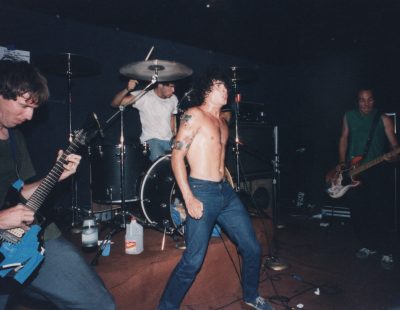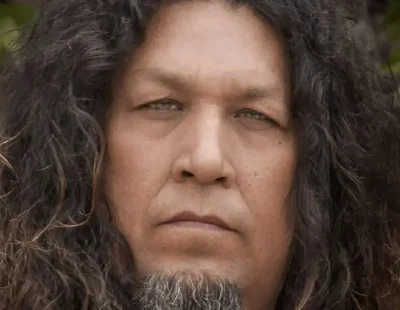

Today is the official release day of Decibel Books’ Deconstructing Towers: The Story of Hydra Head Records, and to celebrate Decibel is proud to reveal a new excerpt from the 600-page, previously untold history of one of extreme music’s most influential and revolutionary record labels by longtime journalist and Great Falls bassist Shane Mehling. The following passage transports readers back to 1993 as a group of young teenage grunge and punk fans in Tacoma, Washington take their first steps towards becoming metallic hardcore heroes as Botch.
————
“We don’t have to play ‘Rock Lobster.’”
Botch are sitting on a tour bus halfway through their 2024 reunion jaunt through Europe, discussing the setlist for their very final show back in America. It’s slated for exactly 22 years after their previous farewell show, in the very same venue.
Of course, things have changed. They did play “Rock Lobster” last time and only filled up the venue for one night. This time they need two to accommodate the number of people buying tickets (it’s still not enough), and many of those in attendance would have never heard the band until after they broke up. Some weren’t even born.
But this isn’t the usual kind of reunion where you’re forced to judge a group of aging musicians on a curve—they were a singular force 25 years ago, but the first show back in their hometown of Tacoma, Washington made it clear that now they’re even better. Both guitarist Dave Knudson and bassist Brian Cook have managed to make careers out of music and are seasoned performers, while vocalist Dave Verellen’s job as a firefighter has kept him in better shape than the majority of people nearing 50, his voice a genetic wonder that requires no real warm-up to scream through an hour-plus of material each night.
The light show is incredible, the sound is better than ever, and the song choices are exactly what a fan would hope to hear.
But even with sold-out shows around the world, effusive celebrations on the Internet and the breathless demands for material beyond the surprise release of one new song (“One Twenty Two”), the band is clearly in winddown mode. They’ve agreed that the last show will be the last show.
And maybe that’s why everything is so easy between them. The band’s initial breakup stemmed from bad blood and creative frustration, but not everyone wanted to call it quits, which sowed resentment and drove a deeper wedge between them.
Instead, these are old friends hanging out who, for most of their lives, have lived within driving distance of each other. They know each other’s families. They have old inside jokes and new ones. At soundcheck, they’ll play riffs from the songs they covered when they first started back in 1993, everything coming full circle.
And to think none of this would have happened if Dave Knudson was better at baseball.
“I went out for like, two or three different baseball teams in seventh grade, and got cut immediately from all of them,” says Knudson. “And I was like, ‘Okay, well, I guess I’m not going to play baseball. But I really like this Metallica record.’”
Knudson had heard …And Justice for All the previous year and exchanged his school band trombone for an acoustic guitar. But it was his inability to hit a curveball that led him to get “obsessed in reverse chronological order” with the Metallica catalog, alongside the remaining Big Four of Thrash—Slayer, Megadeth, Anthrax, in order of Bigness—and bands like Arise-era Sepultura.
“Playing along to those records is how I learned to play guitar,” he says. “I took a few lessons but from a guy smoking in the back of a guitar shop. I’d bring in a tape of a Slayer song, and he’d figure it out for me. It wasn’t theory. I wasn’t reading music.”
Still, the allure of guitar was the virtuosity. Eddie Van Halen’s famous solo in Michael Jackson’s 1982 hit “Beat It” was the first time a guitar part caught Knudson’s attention, and thrash, especially Metallica, quickly led him to dig deeper into what made the music actually work.
“I started reading guitar magazines and getting tablature books and going down that road to figure out what the scale or mode this guy is soloing in. Not theory but very musical.”
He didn’t really have anyone to play with, though. That was until there was chemistry with him and drummer Tim Latona. Literally. They met in chemistry class.
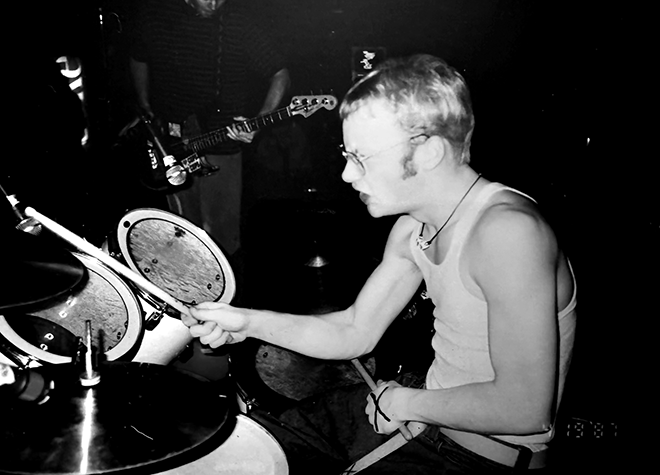
Tim Latona doesn’t like doing interviews. He also doesn’t like answering why he was the only member of Botch who didn’t really do anything after they broke up; his answer is, “I ran out of drumsticks.”
While the rest of the members would go on to Minus the Bear (Knudson); These Arms are Snakes [HR666-78; 174], Russian Circles, Sumac (Cook); Narrows (Verellen); and Roy (Cook and Verellen), Latona faded out of the scene.
With his school’s jazz band as his only other real experience, it might seem he didn’t have much interest in music, but the other members see him as the one who was always pushing the band.
“Tim would always want to confuse people when they’re moshing or head banging,” Knudson says. “You know, have a part come around on the upbeat so then all of a sudden, they’re moshing out of time. And different time signatures on each drum. He made it a game of trying to bring something that would impress the other person or have something super crazy to get their reaction to it. It was one-upmanship to do something cool and unique to stand out.”
This would come later, though. At first they were just playing Helmet covers on Latona’s back patio.
“The idea was initially to just hang out and play together,” Knudson says. “At the time, hair metal was a big thing, and then all of a sudden it turned to grunge. But none of us were into Nirvana or Mudhoney or Pearl Jam. We really only liked Soundgarden because they had great riffs and the drummer was incredible. I mean, still to this day, one of my favorite guitar riffs ever is the last riff in ‘Rusty Cage.’ That’s kind of the through line for Botch, which was awesome drums and cool guitar riffs.”
It was only a few weeks before the duo thought they could do more than just play other people’s songs, and also when Knudson found another guy in another class who happened to play bass.
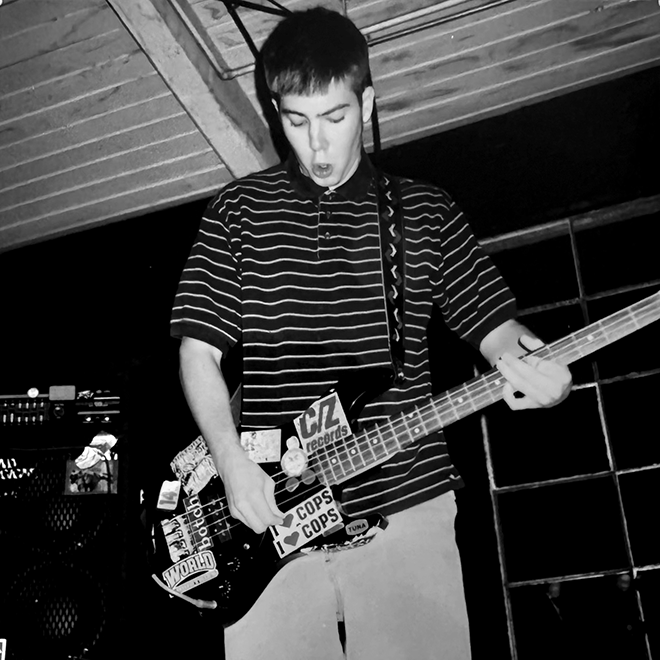
Tacoma is not Seattle. Around 45 minutes south and about three times smaller, it doesn’t boast the contributions to music, sports and coffee of its northern neighbor; instead, it had a copper smelter.
The Asarco industrial plant in north Tacoma, now demolished, spent almost a hundred years poisoning the ground with arsenic and lead before it became a Superfund site. Smokestacks expelled “air so thick you could chew it,” according to Frank Herbert, who grew up in Tacoma and took inspiration from the plant for his novel Dune. A recent book [Murderland: Crime and Bloodlust in the Time of Serial Killers] has even theorized that this pollution is what led to the proliferation of serial killers in the Pacific Northwest, like Tacoma natives Ted Bundy and Gary Ridgway.
That’s not to say it’s a bad town, but it’s definitely a different aura than Hawaii, where Brian Cook was born, a place that teaches kids ukulele in public schools. And that isn’t just a fun fact.
“I’m left-handed, and four left-handed kids had to vie for the one left-handed ukulele,” he says. “So at some point I just said fuck it and started playing right-handed. And when I decided to pick up an instrument, it was the same thing, where I figured I had this natural handicap in a right-handed world. So I picked up bass because I thought it would be easier to navigate with my foreign hand.”
Around the same time Knudson found Metallica, Cook had grown out of the Top 40 on the radio and was lucky enough to start hearing bands like the Cure and Pixies.
“R.E.M. was a big one for me,” he says. “Those kinds of bands always seemed like they had something more to say. They were all weirdos and outsiders and that just appealed to me.”
He was also the kind of person who fell in love with songs because he wasn’t really sure what was happening.
“Music was always exciting when it was kind of mysterious. So once people taught me the specifics and the theory behind it, it lost its luster. When I discovered punk music, it seemed like something anyone could do, but being a non-musical person, it still held a lot of magic. It was still powerful, and I still didn’t understand how it was made.”
Cook had only been playing bass about six months when someone told him that all he really needed to get better was to listen to one guy: Mike Watt.
“So I started listening to Minutemen and Firehose. The fact that the bass was on an even level with the guitar and the frequency range made them so polarized that you could hear every single note.”
That led to Cook’s first band around 14 that he describes as “banging on instruments and knowing that we suck,” and then, after leaving Hawaii, just hanging out in the gloomy Pacific Northwest and writing songs in his bedroom.
“My first year of high school in Washington, I was largely shy but also had a punk rock chip on my shoulder, where it’s like, ‘These fuckers don’t know who Black Flag is, so they’re not my friends.”
Then, one day in math class, Knudson asked him if he wanted to play in a band. Cook liked Helmet and Soundgarden well enough, but the pot had to be sweetened a little.
“He promised we could cover Dead Kennedys’ ‘Too Drunk to Fuck,’ and I said, ‘Okay, I’m in.’”
And lucky for him, the band already had a name.
George Harrison supposedly said, “If we’d known we were going to be the Beatles, we’d have tried harder.”
What he means is that name sucks, and he’s right. That is a name for babies. But a lot of band names suck because band names are inherently pretty silly. You make up a cool name for you and your friends, but then you have to put it on flyers, stand on stage and say it to strangers, and pay money for the name to be on shirts. You have to tell your aunt and uncle the name during Christmas dinner. It also has to be cool and fit with the music you’re playing, and there are other people in the band with other terrible ideas you have to argue about, and all the best names are already taken… it can be excruciating, so sometimes it’s better just to get it over with.
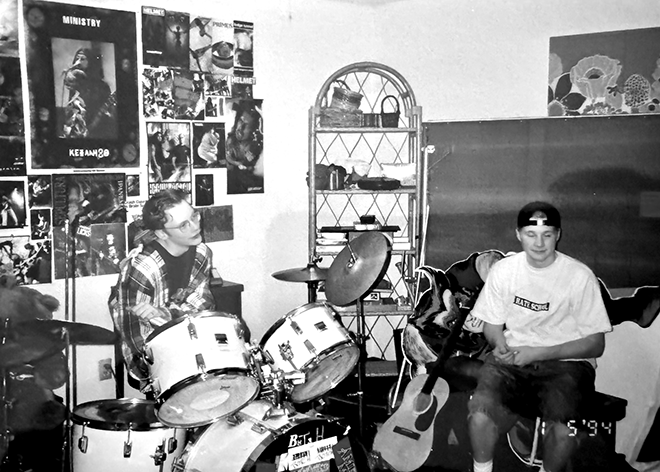
“When Tim and I decided we should try doing a band that day, we chose the band name,” Knudson says. “Tim just brought out a dictionary and opened it up and put his finger down. It was Botch, and we were like, ‘Okay, sure.’ That was literally it. We were a couple of 16-year-olds in 11th grade. We thought we’d be talking about the name for maybe six months and something else would happen that’s entirely different.”
So Brian Cook showed up to Botch practice, which had by then moved to Knudson’s mom’s basement, and learned that the band played in something called Drop D.
“I was like, ‘I don’t know what that means,’” Cook says. “And Dave turns my lowest string down and shows me [Helmet’s] ‘In the Meantime,’ and it was revelatory. I thought they were playing, you know, G-major, C-major, all the church chords that I would never be good enough to do. And then all of a sudden it’s like, ‘Oh, these assholes are just doing one-finger riffs.’ That night I went home and learned an entire Screeching Weasel album on guitar with power chords and thought, ‘Okay, amazing music doesn’t have to be hard.’”
Now it was Latona’s turn to bring in somebody, and if there’s no one in class there’s always the school bus.
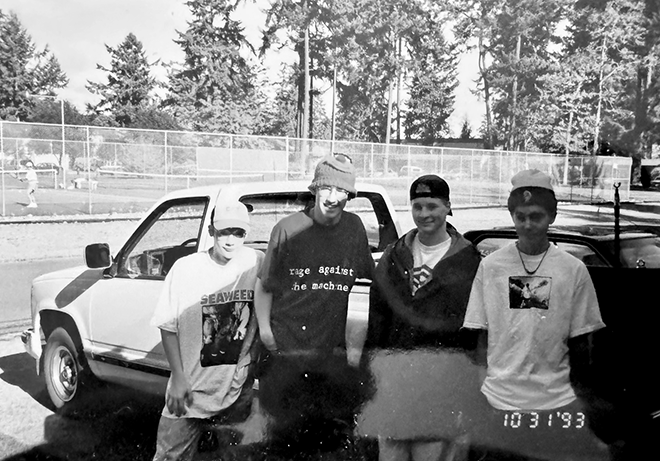
While David Knudson couldn’t hit a curve, Dave Verellen’s departure from sports was more personal.
“I quit varsity soccer because everyone on the team was drinking every weekend and I didn’t get along with anyone. I was also skateboarding [Verellen’s younger brother Ben says he was actually doing rollerblading], and those guys were into Pennywise and California punk stuff, which I thought was okay. My dad bought me an acoustic guitar for my birthday and some lessons, and I really sucked. But Tim was on the bus telling me about his band, and I was like, ‘Oh, I play guitar.’ He said I should bring my guitar to their practice.
“So I showed up without my acoustic and said, ‘Guys, I don’t really play guitar.’ They said, ‘That’s okay, we need a singer.’ And I didn’t know how to sing either, but I knew about Minor Threat and Fugazi and other stuff, and that was enough. They said, ‘Let’s just jam.’”
Humble beginnings from teenagers who really didn’t know what they wanted to do or how to do it. But determined and focused, the band started to figure things out and, for the first couple of years, began writing songs that Knudson refers to as “the worst possible music.”
Botch blast out some heavy, pissed-off snarl punk with hints of Neurosis thrown in for that special thrash touch. They also got my attention with “If Voting Actually Changed Anything it Would Be Illegal,” which is something I personally believe (address of Dave Knudson’s mom’s house). —The Rocket [1994]
“We wrote such horrible stuff,” Knudson says of Botch’s initial songs. “The riffs, the arrangements, the playing, everything was just so bad.
“We were learning how to be a band and interact with other people and play with other people, so at first it was stuff that I think all of us could get behind, almost like the lowest common denominator. There were songs that were emo because we were listening to Still Life, or we wrote stuff that sounded like Helmet [the band once played “In the Meantime” at a show… twice], or we were just copying the influences we had at that exact time we were writing a song. [’90s alternative punk band] Seaweed was from Tacoma, so there were probably songs that sounded like them, and it was just us trying to find our way and see what we were okay at playing, too. It was all just a big experiment trying to figure out what the band would actually be.”
But the earliest available songs from the band aren’t as eclectic as this might sound, nor are they really that bad. Even if the members might prefer memory-holing songs like “Little Engine That Couldn’t,” there is something there. Between the sparks of off-kilter ideas and the competency of the performances, it may not sound like Botch, but if you compare it to the sum of teenage band demos dubbed onto Maxell 90-minute cassettes—which could be unspooled to the moon and back a few hundred times—these are definitely in the upper tier.
Seattle’s alternative paper The Rocket even gave them the review on the previous page, though at that point calling them “punk-thrash” wouldn’t make a lot of sense; the band had replaced their cover of “In the Meantime” with “Firestorm” by Earth Crisis and were sounding like a group of guys who were spending their time at local hardcore shows, often headlined by Seattle straight edge band Undertow.
“Undertow was a big one we saw early on,” says Cook [Undertow singer John Pettibone would go on to be their lighting guy in later years]. “And bands like that opened a lot of doors for us. I think from that point on, we made a hard turn towards hardcore. It was something that was really exciting live and felt really approachable and palpable to us. It was a lot more exciting than whatever Soundgarden was doing in 1994.”
But Cook also realized that, as a gay kid who was still closeted, there was something more for him in the scene. The second time he saw Undertow was at a local youth center, and outside, a couple of kids were picking on another kid for being effeminate.
“And then Undertow went on stage, and they totally called out these kids and made this whole speech about homophobia. And it was one of those things where hearing it, I thought this is important; it means something. So much music that you see is just entertainment. But it felt like there’s this communal and socially aware aspect to what they were doing that to me was really important. It helped solidify my interest in that scene.”
“Brian had asked me if I wanted to go to a hardcore show,” Knudson says, “and I remember thinking, ‘Well, this is heavy, but it’s not very complicated, and the riffs are pretty basic, but like, I get it.’ My introduction to hardcore was ‘Okay, this is dumbed down from what I’m generally interested in, but I totally get the vibe, and I get the power and the emotion, and the raw energy that everyone in the venue has, not just the band.
“After that I wanted that moment where someone would sing along to one of our songs—that there would be enough people in the crowd that Dave could give the mic to somebody.”
Less than a year after forming, they have the name, the members, the genre, the songs and Verellen says, “We were driven, dude. We were on a mission.”
But people still just didn’t really like them.
“We tried to play as many shows as possible, but it was really hard to get booked,” Cook says. “And when we finally got booked on some hardcore shows, there’d been some older hardcore kids at our school, and I think them kind of knowing where we came from, it’s like, ‘Oh, they’re not actually hardcore kids. They’re like, grunge kids.’ And so there was this hurdle of getting past this reputation that had preceded us.
“The first year and a half we struggled to get on shows, and the shows we played usually sucked. Even when we started to find our footing, there was still a bit of a struggle to get to where people really took us seriously.”
“It was us trying to prove that we can do this,” Knudson says. “We’re going to be good enough that we don’t even need these fucking people. That’s why we went to Vancouver so much at the beginning because it was easy to get to, there’s a great scene, but also there’s no one talking shit about us in Vancouver.”
Verellen even remembers a couple of times when the band had been booked for shows that, when they got there with all their gear, turned out to be pranks by other kids.
And this wasn’t some arrogant band with unrealistic goals about fame and fortune. The earliest years of Botch are marked by probably the simplest goal that any hardcore kid dreams about.
“I thought if I could put out a 7-inch,” Cook says, “I could die happy.”
Then one day, they had a 7-inch.
Of all the ways music has changed since the ’90s, one thing that we’re probably never going back to is hardcore bands caring about 7-inches.
Your grandparents’ stack of what they called 45s may have seemed quaint at one point, but your own impressive collection of tiny records is slowly becoming just as outdated.
Back in the ’90s, they were everywhere, at every show, put out by every label. Most early Hydra Head releases were 7-inches, and for good reasons, both artistic and practical.
Turner saw them as a “proving ground for a band,” allowing a label to put out a few songs with minimal risk.
Hex Records founder Ryan Canavan—also known for his ’90s/’00s zine Hanging Like a Hex—said 7-inches at one point cost less to make than CDs and “if a band breaks up or a record doesn’t sell well then a label would only be out like 200 bucks.”
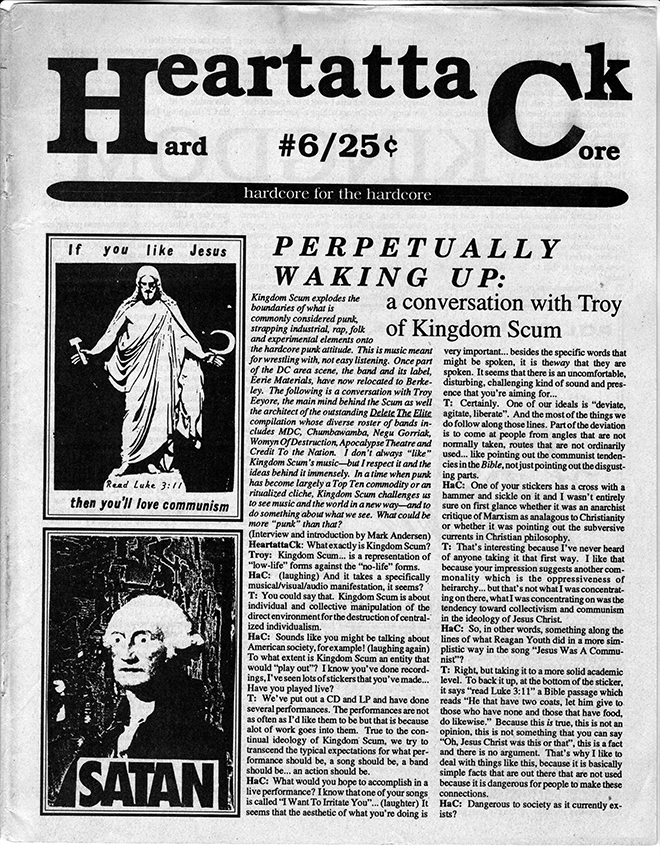
But they often did sell because, again, they were cheap and stayed cheap—an issue of beloved hardcore zine HeartattaCK from 1995 has labels selling 7-inches for $3, and an issue from 2004 has some labels selling 7-inches for… $3 (though many had by then jacked it up to $4). Not only could people afford to take chances on bands they’d never heard, but the popular split 7-inch meant they could spend a few bucks, hear a band they already liked and possibly find something new.
And the quick production turnaround of 7-inches—sometimes only a few weeks—allowed bands who only had a few songs or some oddball idea to produce a physical item they could bring on tour. And while Hydra Head did better than most, they were just one of the labels that saw the format as ripe for interesting packaging and artwork.
So what happened? The number one reason is obvious if you buy records—records got ludicrously expensive. All records did, but inflating the price of a full-length has become a much easier pill to swallow than something that contains seven minutes of music. The Apollo Masters Corporation fire in 2020 helped seal the fate of 7-inches, as it was not just the one factory in America that produced lacquer discs for vinyl, but only one of two in the whole goddamn world (shoutout to MDC in Japan). Since then, a movement in the vinyl industry to make up for that loss has further deprioritized the production of 7-inch records.
And then there is the culture shift—the brevity of a 7-inch means you
have to pull out the record, place it on the turntable, drop the needle and before you can finish one round of Candy Crush Saga you’re getting up to flip that thing over. The era of streaming playlists has made this kind of babysitting feel almost masochistic.
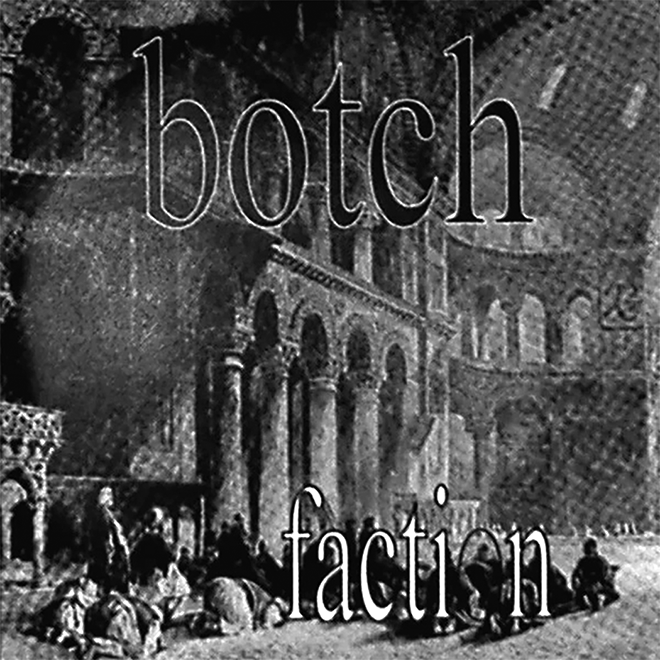
But back in 1995, Botch wanted a 7-inch, and thanks to short-lived local label World of Hurt Records, Faction was released. And it really did mean the world to them.
“A 7-inch was validation,” Cook says. “Someone had faith in you. And if someone bought one, they can’t just tape over it. They were intending to hold onto it. This sounds maybe kind of corny, but it was like, now there’s something that I made that has my name on it that a stranger might buy and it will be around as long as they let it exist in this world.”
It was also when the band began to feel they were actually making musical progress.
“I think it was the song ‘Ebb,’” Knudson says. “We thought that we had finally stumbled onto something. The stuff that worked on that song was the direction we needed to head. We were never ashamed to play, but we started to feel confident in what we were playing on stage. It was these little incremental steps, this little ladder with little, tiny pegs where we were trying to get to the next one. And now we could stand behind the fact that we like this song. So we’re going to play it and act like we belong here.”
Emboldened by the 7-inch, the band booked a couple shows in a community center outside Tacoma and invited Seattle bands to come down and play.
“Those were real turning points,” Cook says. “All our friends came out, and their friends came out. And all of a sudden, we had these big shows we were throwing. We had achieved this thing we wanted and just had to do it on our own and stop expecting people to get us to that point. It felt like not only are we a real band, but people like us.”
Those were the shows when Dave Verellen was finally able to hand the mic to the crowd and watch people begin to sing along.
Deconstructing Towers: The Story of Hydra Head Records is now available exclusively from Decibel Books here.