Living and Dying
The Making of YOB’s Clearing the Path to Ascend
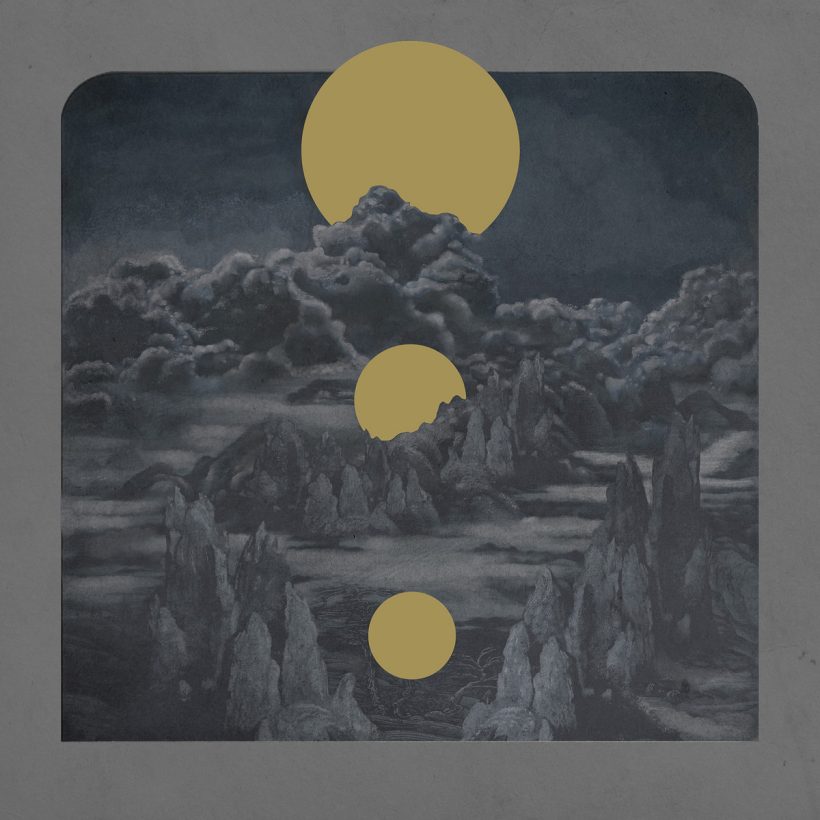
By the time YOB released Clearing the Path to Ascend in 2014, the band was 18 years into its career. Well, 16 years if you don’t count guitarist/vocalist Mike Scheidt’s lone album with Middian after YOB v1.0 called it quits in 2006, but before Scheidt realized that he missed YOB as much as the rest of us. Why did it take so long for the band to issue its magnum opus, when many of their peers burned bright and faded away? As M. Scott Peck summed it up in The Road Less Traveled, “Life is difficult.” It takes work to achieve spiritual growth, and an equivalent amount of effort to put things together musically in a way that resonates for both the band and the listener.
Mind you, the first six albums in the band’s discography all have transcendent moments and crushingly heavy dirge parts and ample space for exploration, prompting Pitchfork to observe in its review of 2012’s Atma, “When a band latches onto something it loves, be prepared to go the distance.” But Clearing the Path to Ascend is a dramatically more nuanced effort due to the ambiance of longtime engineer Billy Barnett’s vintage gear and the dynamic approach of YOB’s rhythm section Aaron Rieseberg and Travis Foster, who are very much “in the pocket” across the album’s four tracks. This album also represents a sea change in terms of Scheidt’s approach to vocals, as he started working with a coach to prevent fatigue, ensuring a seamless transition between the clean Ozzy-esque vocals and guttural growls.
On a metaphysical level, Clearing the Path to Ascend also suggests a great awakening. “Unmask the Spectre” is absolutely keyed into Scheidt’s Dzogchen Buddhist-inspired worldview, and the lyrics strike a chord as a mindfulness mantra independent of the music. Scheidt’s favorite philosopher Alan Watts also shows up once again on the album’s opener “In Our Blood,” where one sample sets the tone for the entire album: “Time to wake up.” Watts argued that darkness is what throws light into sharper relief; album closer “Marrow” might be the first time in the YOB’s entire catalog that they swung a window wide open and allowed all of the light to shine in.
The first three songs on this album portray struggle, which is familiar territory—emotionally and musically. Not to assign too much import and value to “Marrow,” but it’s the key to unlocking the thrust of the entire album: It shows the vastness of the panorama that can be observed at the summit after the very arduous uphill climb that flows from “In Our Blood” to “Nothing to Win” to “Unmask the Spectre.” All YOB albums reward a patient ear, but Clearing the Path to Ascend becomes a complete out-of-body experience by “Marrow.” This isn’t the only album in the Decibel Hall of Fame structured around a general theme of turmoil, but it might be the only one that comes with its own spiritual cleanse.
Need more classic YOB? To read the entire seven-page story, featuring interviews with both members who performed on Clearing the Path to Ascend purchase the print issue from our store, or digitally via our app for iPhone/iPad or Android.