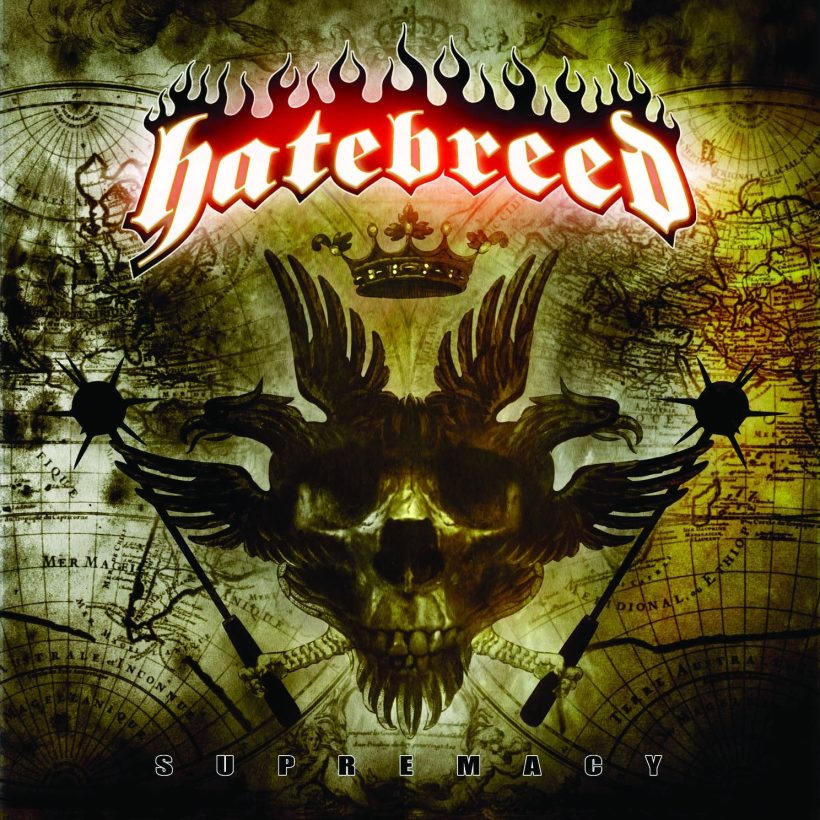
In the mid-2000s, there was no bigger band in hardcore than Hatebreed. Riding high on the cult success of their 1997 debut album, Satisfaction is the Death of Desire, and the wider success of their more metallic followups, Perseverance and The Rise of Brutality, Hatebreed caught the attention of Roadrunner Records, who signed them for their fourth album, Supremacy.
Arriving this week 20 years ago, Supremacy still holds a strong place in Hatebreed’s remarkably-consistent discography. At a time when many hardcore and metalcore bands found influence from the Swedish melodic death metal scene (Unearth, All That Remains and Killswitch Engage all released major albums the same year), Hatebreed dug deeper into their sound and released one of their heaviest albums.

Shortly after the release of the album, former guitarist Sean Martin explained Hatebreed’s philosophy:
“Regardless [of] what people say, we always stayed true to what we believe in. Stayed true to our fans and friends back home. We just stayed true to what we think Hatebreed should be, we don’t deviate from it. And I think that’s what people want.”
Hatebreed have always worn their influences on their sleeve: the hardcore punk base of Agnostic Front and the crossover attitude of Cro-Mags, the speed of Slayer and the groove of Sepultura. Those ingredients, paired with frontman Jamey Jasta’s drill sergeant vocal delivery, have always been Hatebreed’s calling card and it’s no different on Supremacy. The Connecticut hardcore band’s fourth album produced no major singles, though “Destroy Everything” and “To the Threshold” became major live staples. Instead, it’s like an affirmation that nothing has changed about Hatebreed’s philosophy.
In addition to releasing Supremacy on a major label, Jasta had become the host of MTV’s Headbanger’s Ball in 2003 and Hatebreed received a Grammy nomination in 2005, signaling their rising mainstream popularity. Despite those factors, Supremacy is straightforward and raw, with a renewed focus on the grooves and breakdowns (“Supremacy of Self,” “Destroy Everything,” “Mind Over All”). There’s less focus on the accessible side of the sound, which makes it one of the heaviest records in Hatebreed’s discography.
20 years removed from its release, Supremacy still feels like an essential 2000s hardcore record. There is real magic to its directness and Hatebreed’s consistent knack for finding new ways to maximize heaviness within those confines, a trait they’ve maintained into their fourth decade as a band.
In a press release at the time, Jasta said, “I wanted to tap into pure adrenaline — the speed, the brutality, the breakdowns. I wanted to make a crushing record that was going to have a memorable impact on people.”
Mission accomplished.