
Decibel Books proudly presents Sodom: The Official Authorized Biography, the fully authorized biography of the German thrash legends Sodom, finally translated into English. Sodom: The Official Authorized Biography features interviews with nearly every past and present member of the band along with a supporting cast of the German thrash metal scene. Packed with over 200 rare and previously unreleased photos, this hardcover cover history is over 300 beautifully-designed pages, fully-translated to English. Fans can pre-order their copy now with books having an expected ship date of late May/early June.
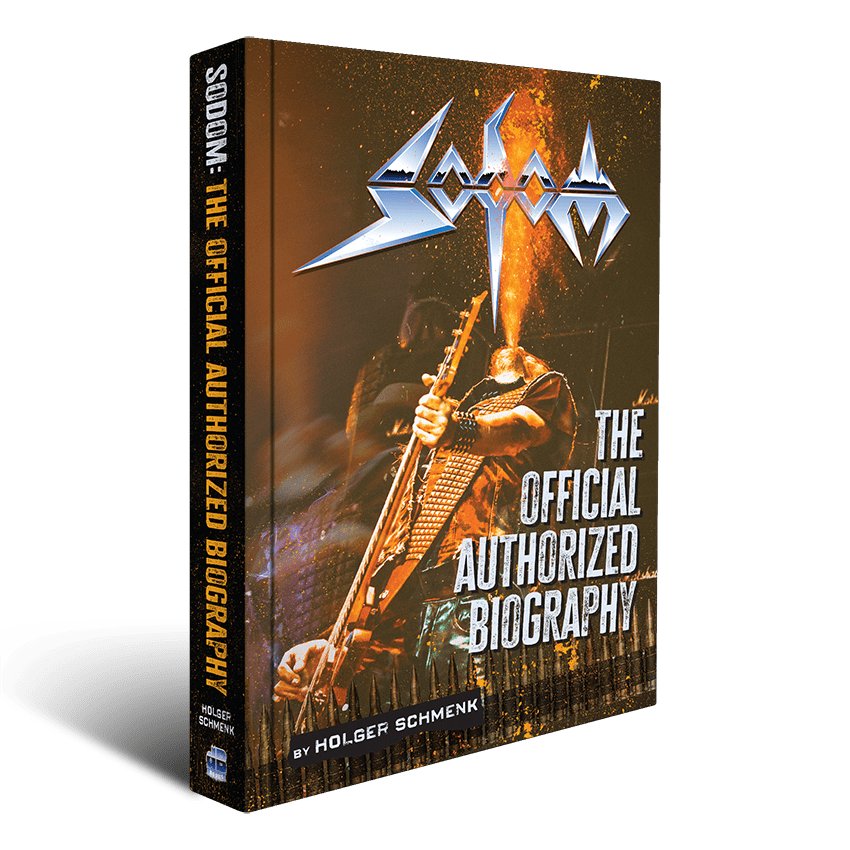
For an exclusive preview of Sodom: The Official Authorized Biography, fans can read the first excerpt online, which turns the clock back to 1984 and the recording of the band’s landmark In the Sign of Evil EP.
——————–
In the Sign of Evil: The First EP
There was something completely new emerging in the form and shape of Ruhrpott thrash. Manfred Schütz, a native Bavarian who, for several years, had run, among other things, the Musicland music store in Hanover, founded the independent label SPV (Schallplatten, Produktion und Vertrieb, which translates to “Records, production and distribution”) in 1984 and released metal albums under the genre-specific sub-label Steamhammer. However, since Sodom insisted that the lyrics be included on the record, Schütz found the whole thing too hot to handle (and, according to legend, the quality of the English lyrics did not sweeten the deal either). This led to the creation of yet another subsidiary label, Devil’s Game, specifically for this release. Within just a few years, SPV became a major player in the independent music scene. For a quarter of a century, it was the leading European distributor for heavy metal—fans would not only look out for certain label names, but in this case, the SPV Distribution sticker served as a sign of importance as well.
Schütz wanted to achieve much with SPV—and quickly. None other than Horst Müller from Casablanca Studio in West Berlin, who had overseen the first Running Wild and Celtic Frost productions, was put in charge of recording and producing In the Sign of Evil. Officially, the album was produced by S.A.D.O. guitarist Wolfgang Eichholz. According to Angelripper’s recollection, he was hardly ever present in the studio: “He came in, quickly checked what we were doing, said, ‘Carry on!’ and took off.”
Strictly speaking, Sodom had ideal conditions to create a sonically groundbreaking album with a true professional at the helm. But things turned out differently. It did become groundbreaking in terms of sound, but not for thrash metal—instead for the Norwegian black metal scene and, to a lesser extent, death metal. At the time, however, the record company cut production short.
“Oh yeah, I would have done the same if I had been in their shoes,” Angelripper comments today with his typical gravelly laugh. “When we went into the studio back then, we didn’t have a clue whatsoever. We didn’t know anything about the process, about what was expected of us: First to record the drums, then add guitars and so forth. And on top of that, we were not tight enough as a band at the time, which you can clearly hear on the recordings. It was the first time in our lives we’d ever been to Berlin. Instead of focusing on the tasks at hand during the day in the studio, we rather enjoyed Berlin at night and what it had to offer. None of us back then thought we’d ever be allowed to record a full-length album afterwards anyway. On the other hand, it was not unusual for a label to do an EP first to see how things would develop.”
While the national fanzines reacted to their first two demos mostly with anything from incomprehension to irritation, the international reactions were, in some cases, euphoric. “Yeah,” Angelripper confirms, “in Germany we couldn’t achieve much in the press with the demos, but the Americans loved them.” In issue #26 (July 1984) of Kick*Ass magazine, for example, editor Bob Muldowney wrote: “Who are the heaviest of them all? The West German Thrashers Sodom seem to be taking their Death Metal to a nearly unsurpassable new level. I never thought it could be heavier and rawer than Welcome to Hell, but Sodom have done exactly that.”
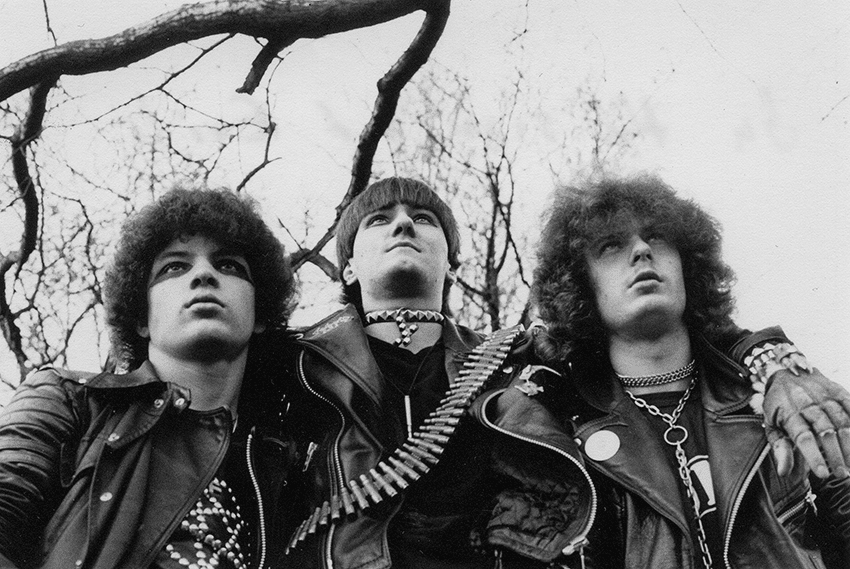
Kreator’s Mille Petrozza puts it just as appreciatively: “The sound is great. They’re a bit out of sync with each other, but that’s what gives the record life. In hindsight, you can say it was like a snapshot photograph. Not perfect, but awesome.”
Angelripper describes their first stay in Berlin: “We grabbed a few cases of beer each night (one German case of beer holds 24 cans each; each can holds 17 oz.) and roamed around town. For lodging, we were put up at the guest house ‘Pension des Westens’ (Boarding House of the West), which must have been the shabbiest dive in all of Berlin. The only people present were truck drivers and shady characters at the tables in general, and we were right amidst them. In the morning, some fat northerly lady would come in and make us all breakfast. Witchhunter, who had a short fuse to begin with, was very upset: ‘We’re making a record here, and we have to live in this hole-in-the-wall basement!’”
The label was apparently trying to cut costs and gave the impression that it still did not genuinely believe in this band of cheap beer-drinking maniacs—a band that would ultimately have a distinguished future. In 1984, however, no one could have foreseen that.
Grave Violator strikes a similar note regarding the support during the recordings: “We wanted to drink and party, and at the same time, we were supposed to record an album seriously. It worked out pretty well for us in the end, but we were amateurs along the way. I can remember one hilarious scene in particular: Tom asked how the vocals were coming along. I was standing behind the glass of the monitor room with Horst Müller next to me, and Horst just burst out laughing: ‘What vocals?’ He probably did the whole thing just for the fun of it. He didn’t offer us any support at all. For example, the drums would speed up during a take, and no one noticed or stepped in to help us. That was a bit of a shame in hindsight.” (Note: This may also have had something to do with the producer being constantly high on drugs, if you can trust the band’s memories.)
Peppi himself went straight home after finishing the recording of the guitars. To save costs, the label arranged a ride home with the guys from Helloween, who had just played a show in Berlin. The Sodom guitarist, who, at that time, “was into the really hard stuff,” wanted nothing to do with these “posers.” “Those were two completely different worlds,” he says, “and it was a very, very frosty atmosphere on that bus on the ride home.”
An SPV employee who arrived at the studio threw up his hands in despair and immediately halted any further recordings. As a result, only the EP was recorded and mixed, rather than a full-length album. Tom’s bass solo is listed in the booklet, but it was not included on the record: “I can’t even remember how I recorded it. Either Horst Müller didn’t use it because it was terrible, or the label didn’t want it, or it was simply forgotten. It’s a bizarre story.”
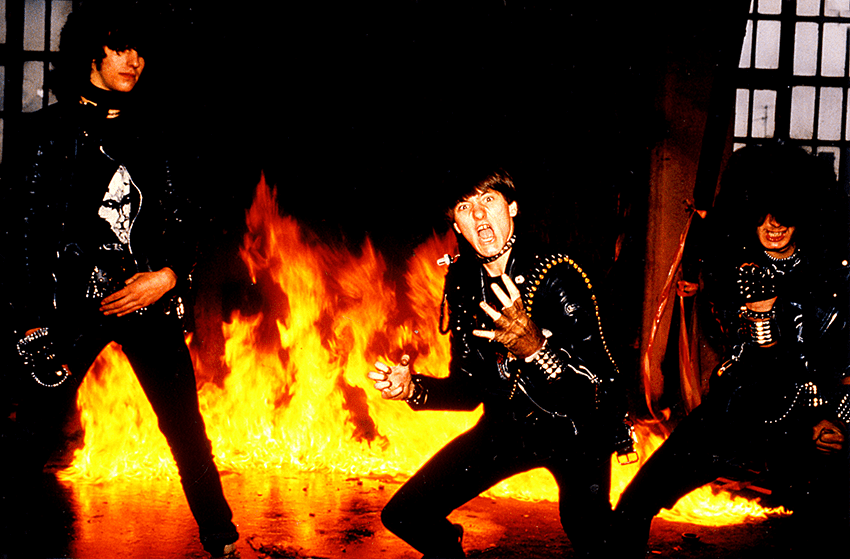
His bass playing is unique regardless, as future Sodom guitarist Andy Brings explains: “What matters is whether the bass playing has character or not. Tom doesn’t strum the strings from above; he digs right into them. I don’t know anyone who plays like that. Completely unorthodox.” His successor, Bernemann, confirms this: “That’s the typical Angelripper technique. Nobody plays as he does. Actually, it’s just as wrong as what Witchhunter did. But it has something to it, a unique tone and character.”
However, that was little consolation for SPV.
“The label was very unsure whether they could make any money at all with this kind of music,” said Witchhunter. “Music that wasn’t that popular back then. But thank God they gave us the chance.”
Why the label was bewildered by the music and the lyrics remains a mystery to this day. After all, Manfred Schütz himself had seen and dis- covered his protégés at the Frankfurt show. Eventually, Sodom’s first chart success in 1989 solidified them to as the label’s future cash cows. Still, it was not until 2007 that Sodom carried out their plan to record and release the previously abandoned seven tracks under the title The Final Sign of Evil—again on SPV/Steamhammer. They even managed to reunite the original EP’s recoding lineup just for the occasion.
Even if the musical quality can certainly be classified as borderline—depending on your perspective—Sodom were pioneers at the time, as many fans and musicians confirm. Most of the songs on In the Sign of Evil come across as occult. But themes of war also play a role, offering a glimpse of the band’s future lyrical direction, which was perfected on Agent Orange. The idea for “Burst Command ’Til War” was brought in from the Bundeswehr (German armed forces) by the singer and bassist, who was stationed with the Luftwaffe (Air Force) in Delmenhorst near Bremen: he was assigned to bunkers, which housed cold war missile strike systems, and that is where the “burst command”—essentially the launch command unit—was located. “I always associated the launch of a missile with war,” says Tom. “Keep in mind that this was during the time of the Cold War.” The disturbing yet cult lyrics “masturbate to kill myself” from “Blasphemer” also go back to that period (“We were in the military back then, after all”).
The artwork was created by Joachim Pieczulski, but not to the band’s complete satisfaction because the band logo was not placed dead center. “In hindsight, it’s a pretty cool cover, even if it’s nothing outrageous graphically,” Tom explains. “It was already completed, and they had it ready to go. The back of the inner sleeve was left almost blank, even though a band photo was supposed to go there. That’s really annoying.”
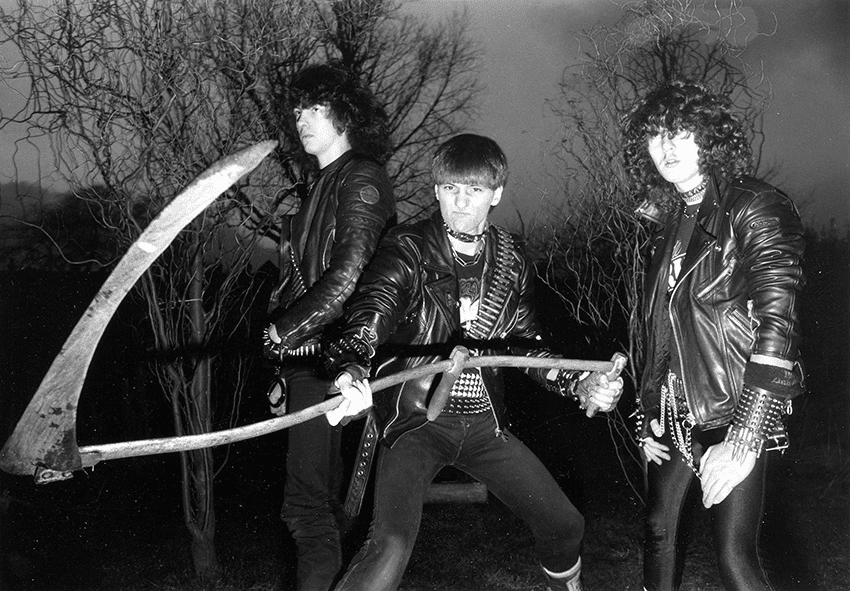
The reactions within the German scene were, at times, devastating—such as Holger Stratmann’s in the German magazine Rock Hard. Tom, whilst laughing: “Of course. Back then, they tore us to pieces in the reviews all the time. But we thought that was awesome. Nothing better can happen to you than getting one point in Rock Hard (Arschbombe, aka Butt Bomb, the magazine’s reward for being the worst release of the month, was perceived by some as a must buy; Beherit and Blasphemy were both bestowed the honor years later). It wasn’t about being good musically; we just plain wanted to be the hardest band in Germany, and we pulled it off. That didn’t change in the first few years after that either, we just didn’t give a damn.”
Grave Violator remembers the media reactions a bit differently. For him, it was split. “Some reviews were really devastating, others thought we were harder than Venom. It was a mixed bag, but for the most part, the EP went down really well. Of course, there are mistakes on the EP, but it captures the band’s spirit at the time. Back then, I would never have expected Sodom to choose me as their guitarist, given my limited abilities. But I guess the job profile didn’t mention being a guitar virtuoso. It said, “be able to drink heavily and have fun.”
Regardless of whose memory is accurate, within a few months, over 50,000 units were sold. A tremendous sales success that made Sodom a force to be taken seriously and confirmed Manfred Schütz initial instinct. “It was a strange feeling to see your own band’s release in the record store,” Violator recalls.
“We were very receptive to noise and racket. If someone hadn’t tuned their guitar right, we thought that was awesome and were into it. Nobody knew what was right or wrong; there was no right or wrong. The scene was in the middle of being created,” is how Lacky describes the attitude to life of his metal generation.
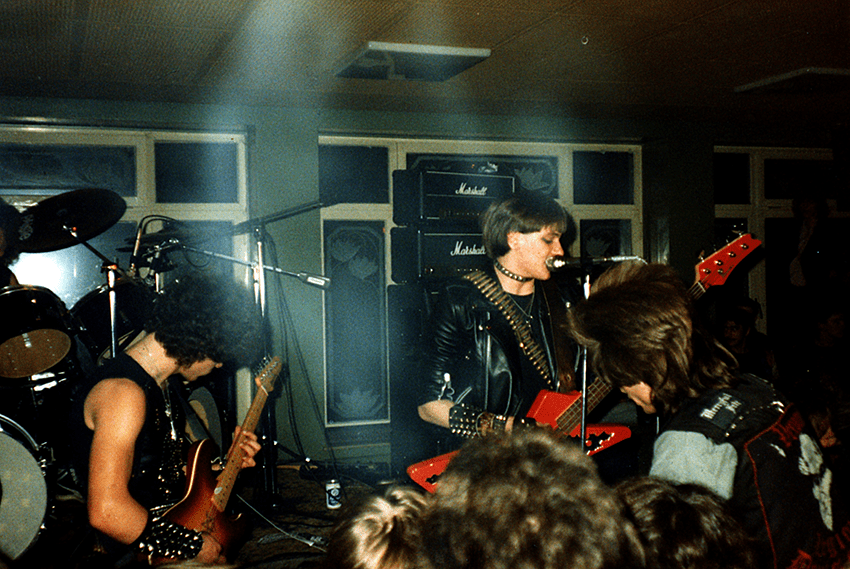
Mille Petrozza offers: “I don’t think Tom even remembers that. He inspired me back then; we had just put out the Tormentor demo, End of the World. After Sodom had recorded the EP, they came to Peppi’s place, and everyone was totally drunk and celebrating. Tom, Peppi and Witchhunter were headbanging to their own songs. We were sitting on the couch, and Tom said to me, ‘You guys need to record an album now, too.’ And I replied, ‘But we’re not even that good yet.’” After that night, Kreator’s then- manager Andreas “Stoney” Stein sent a demo to Noise Records founder Karl-Ulrich Walterbach. “That was a real stroke of luck. We would prob- ably have waited another two years; that jump into cold water was exactly the right thing to do.”
How times have changed: when the EP came out, Rock Hard magazine was on the verge of awarding negative points, but in 2009 the magazine included In the Sign of Evil on its list of the 250 most important thrash metal albums. An eventual validation for Chris, Peppi and Tom. The guitarist from back then proudly claims: “If the first records hadn’t been that successful, probably no one would have paid any attention to Andy Brings later.” Even so, it’s fair to say, as Brings himself, one of Peppi’s successors, put it, that the EP is “the biggest crap ever pressed onto vinyl.” Music is, and remains, a matter of taste. But, of course, he acknowledges its cult status. “I’m aware of that, and I don’t want to drag it through the mud.” Musically, it just isn’t his thing.
For many metal fans, however, In the Sign of Evil has “developed and marinated” over the years, as Ronny Bittner from Rock Hard magazine explains: “If you’d asked me about it back then, I’d have said: crude. For us as teenagers, it was total noise, even if it had a certain charm. When I first started listening to metal, Metallica’s Black Album had just been released, and it was produced fantastically. I think everyone who first got to know heavy metal in the ’90s got spoiled by these big productions. With today’s knowledge of how the album influenced people in Scandinavia, and with that really fitting intro, it has atmosphere, even a cult factor to it. Something else I find amusing: I saw a teenage girl a while ago wearing an In the Sign of Evil T-shirt. Tom is now over 60, and in the ’90s, metal represented a young musical movement. It’s fascinating that someone young nowadays is wearing this very shirt from an album with that kind of sound. Maybe that’s precisely the counterproposal to the sterile sound that mainstream metal has become.”
Pre-order Sodom: The Official Authorized Biography exclusively from Decibel Books here.