The digital age has deprived us of the sense that an album is an event. By the time a record is released, it’s been shared piecemeal via song premieres, lyric videos, and more. The day before the album comes out, there is often a full album stream. In some cases, there isn’t even a physical album. An album is just code floating inside a server farm.
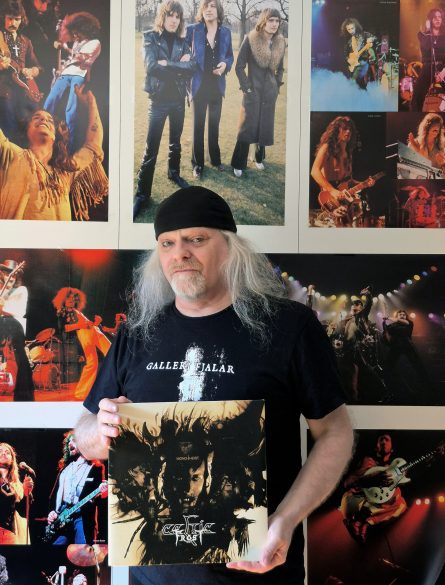
Celtic Frost’s comeback album, Monotheist, released on May 29, 2006, was one of the last album-release events I remember. There was tremendous anticipation for it; on release day, I went to Rasputin and purchased my digipak. Within twenty seconds of hearing the opening track, I knew the fabled band of my youth had righted the ship.
Two decades later, Monotheist has taken its place as one of the “big four” Celtic Frost albums, alongside Morbid Tales, To Mega Therion and Into The Pandemonium. Unlike its more compact predecessors, Monotheist—which featured guitarist and chief songwriter Tom Gabriel Fischer, bassist Martin Eric Ain and drummer Franco Sesa—was sprawling, dense and often slow-paced. Monotheist also reached new generations. For listeners who came of age with Celtic Frost, Monotheist‘s emotional depth mirrored the challenges of adulthood. For younger listeners, the band’s renewed heaviness led them back to Frost’s formative work.
Monotheist has aged incredibly well and is one of the rare albums that reveal more with dedicated listening over time. If there is anything bittersweet about it, it’s the loss of Ain, who fully embraced his role as a songwriter on the album. Although Celtic Frost split just two years after this album, Fischer and Ain remained in contact and sometimes talked about working together again. Fischer has continued the path of the 21st-century Frost with Triptykon, which recorded the Hall of Fame-certified Eparistera Daimones just two years after Celtic Frost’s final breakup.
Monotheist is where Fischer put the ghosts of the late ’80s to bed for good and opened a creative wellspring that shows no signs of abating. Fischer talked to us about Monotheist’s 20th anniversary and the backstory of one of the watershed metal albums of the early ’00s.
You recently had the chance to perform the song “Welcome To Hell” with Mantas and Abaddon. Venom is the band that launched your entire career.
That’s the reason I accepted the proposal. I get offers for guest vocals or collaborations all the time. But Venom shaped my entire life, especially the first album. I didn’t have to think about accepting this. Little Tom wouldn’t have believed it was happening 45 years ago. We bonded during rehearsal, so even though there was a lot of pressure to do the song justice, it was so much fun. Bulldozer from Interceptor [who handled bass and vocals] is phenomenal. He flew from America right to rehearsal; he’s in his 20s and tasked with playing this legendary music. You can’t replace Cronos, but he has the same kind of style and energy Cronos had in the early days.
Can you believe it has been 20 years since Monotheist was released?
I will be 63 this summer. At my age, you come across the sensation a lot. Triptykon has been together longer at this point than Celtic Frost. So the 20-year period is one of those mind-blowing experiences you have if you survive to become an old musician. The only reason I get to experience this is the grace of the audience. That’s the astonishing thing, and I’m grateful. For me personally, it [Monotheist] is extremely important. I am responsible for Celtic Frost’s great flaw: Cold Lake. But that’s also the reason I wanted to make up for it. We all needed to prove to ourselves that we could still sound like Celtic Frost.
How did Celtic Frost decide to get back together in the early ’00s?
In films, everything is black and white, but real life is more complex. Everything is the result of a thought process. Celtic Frost dissolved in April 1993, but we had already lost the plot years earlier. The latter incarnations of Celtic Frost had nothing to do with the early spirit. We knew this, but we still carried on. The band dissolved because the concept of Celtic Frost had run its course.
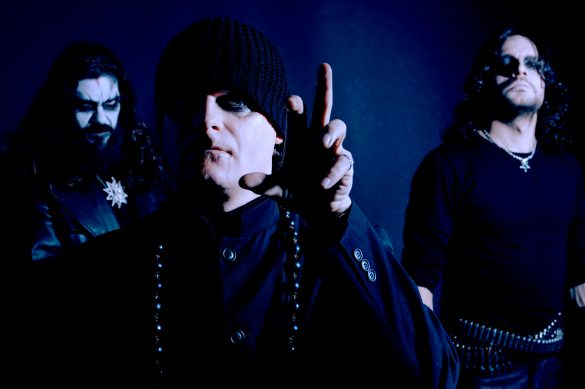
Martin and I met throughout the ’90s and discussed our past, present, and influences. It helped us develop into adult musicians. In 1999, Noise Records asked me to oversee the Celtic Frost reissues, which I did in Berlin. I remastered the records and dug into my photo archive. It made me reevaluate Celtic Frost’s history. Martin was also involved. These steps helped us get close again musically and talk about how Celtic Frost should have continued. The final step was attending the Roxy Music reunion tour in 2000. I went to three concerts and was blown away by how good the songs sounded. I said to Martin: “If Roxy Music can do this, we could do it, too.” Martin agreed, so we began in 2001.
In your time away, black metal became a huge global commodity. A lot of those bands cited Celtic Frost’s early work as a huge inspiration.
I lived in America in the mid-1990s. I missed the birth of the second wave of black metal, whereas Martin followed it closely. I came back to Europe in the late ’90s and was blown away by what had happened to extreme metal. Journalists were asking me about my influence on the new black metal. I was half a world away from what was happening in Scandinavia. I had to catch up on the scene, while Martin experienced it in real time. He introduced me to many of the bands. The more extreme and underground, the better. He loved Mayhem, early Darkthrone, and fringe black-metal projects.
Martin always seemed to provide Celtic Frost with an intellectual and stylistic backbone.
Martin hardly wrote any music until Monotheist. He was active on an ideological platform, and I was active on a musical platform. But we never separated the two. Music was always connected to ideology for us. I can’t imagine any of the early Celtic Frost songs existing without both of us.
What happened after you decided to bring the band back?
We had such a bad experience with the recording industry in the ’80s. When we started talking about reforming the band 15 or so years later, we were far more experienced. We said the recording industry won’t enslave us. We decided to take full control and make all the decisions ourselves. We came up with the money ourselves. This gave us the freedom to take our time with Monotheist. The reunion started with all-night conversations about how we wanted to sound. We also talked a lot about earlier mistakes. We wanted to do it right and do the music justice.
How soon after you reformed did you have songs or ideas?
We decided to reform in 2001. There was music from the beginning. The demos started in 2002 and 2003. The early work was a process of searching. What direction should the album go in? Celtic Frost had many faces. We needed to determine what the face would be. The early demos were so experimental, and we tried pretty much anything. Having done Into the Pandemonium, we were completely open artistically. We recorded anything that came to mind to see what worked and what didn’t. The process was simple: record anything and focus on feeling. We needed to find what sounded like a Celtic Frost album. We worked on the album for five years.
People who hear the Prototype demo online act like it’s an outlier, but Celtic Frost was always experimental to a fault.
Prototype was recorded for Music for Nations, which had expressed early interest in the Celtic Frost reunion. We wanted them to hear what we were working on. There were 20 copies of the demo. When the Internet age came, the demo went public. That’s fine with me. But it was in no way meant to be a Celtic Frost album. It was just meant to show some ideas. The demo is very adventurous.
As a result of that demo going public, we did get to hear Martin rapping.
It [“Hip Hop Jugend”] is an odd track [laughs]. The best description I can think of for it is interesting. It was a typical Martin thing. I wasn’t involved in the song beyond some backing vocals. It was Martin expressing his frustration as someone who managed hipster clubs in Zurich. It was about people who just partied mindlessly, so he put it into a song. It was a parody of that scene. If you hear that song and don’t know his background, it wouldn’t make sense. But we never considered “Hip Hop Jugend” for a Celtic Frost album.
Martin and I had an extremely deep relationship, like brothers. It was a complex relationship. The relationship resulted in these creative outbursts. Before Martin died, we talked about how we turned conflict into art and creativity.
How did you finalize the material that ended up on Monotheist?
Initially, it was like being blind, reaching into a dark room. Once we started playing and practicing several times a week, the process of radicalization began. When all the Marshalls were on, and we had live drums, the good songs started to show themselves. The ludicrous experiments went away, and the dark riffs manifested. We were overwhelmed by the radicalization. We focused on: what is the essence of who we are now? Month by month, the album became darker and heavier. The heavier it sounded in rehearsal, the darker it got.
Martin became a songwriter and collaborator on Monotheist.
I’d been waiting for this for years. I urged Martin to write music from the beginning in Hellhammer. He had phenomenal lyrics and ideas, but didn’t have finished songs. In the 90s, we went out for dinner, and he told me he always felt inferior and intimidated. I told him I was always waiting for him to write songs and believed in him. When we got back together in 2001, and he had some songs, I was happy the gate was finally open. Martin brought in some fragments for “Mesmerized” during Into The Pandemonium. With Monotheist, he came in with some finished songs. I love the song “Ain Elohim”—it’s extremely powerful. I only co-wrote a minority of it. We just made it a little better. Martin and I wrote “Synagoga Satanae.” It was 50/50. We could never have done that collaboration in the early days. It’s one of the most important songs in the band’s history
I think it’s also one of the band’s heaviest songs.
It sounds very heavy and is a dark, cumbersome song. It shows what the mature Celtic Frost was capable of. I wrote the skeleton of the song, and Martin took my riffs and wrote an equal amount of it. It’s a full collaboration.
How did you know when the album was complete?
After about five years, we condensed everything. We actually ended up with too much material. We decided to go to a proper studio in 2005, make the best recordings, combine them and shape them into an album.
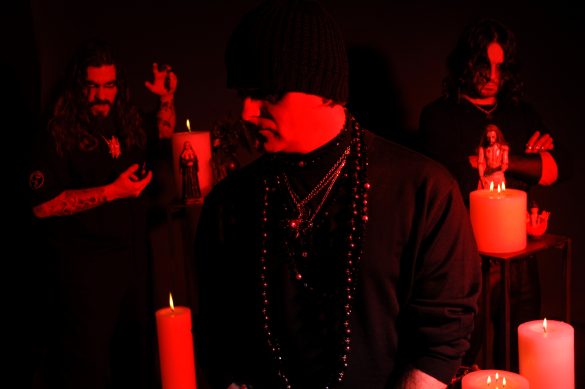
When Monotheist arrived, people were genuinely excited. The album’s release seemed like an event when such things were still possible. It was interesting to experience, remembering what the band’s early years were like.
For most of the ’80s, we were an underground band. [For Monotheist] went out shopping for a licensing deal. We wanted a deal that did the album and Celtic Frost justice. We talked to several labels and their management to find a licensing deal. Century Media committed to a real publicity campaign. We felt Celtic Frost shouldn’t be remembered by Cold Lake and Vanity/Nemesis. We felt the band needed to have a statement for contemporary times. It was gratifying that the reviews and the audience felt the same way.
Of course, we couldn’t plan it, and we were ready for any reaction. We were ready to face even hostility. People would like it or hate it. But then the dam burst, and everyone seemed to love it.
The opening track “Progeny” is one of the most aggressive tracks on the album and draws listeners right in.
We were open to change until we finished mixing the album. We wanted to listen to some final mixes. “Progeny” was an early candidate [for the opening song] because of its energy. It just happened by intuition. One thing I’ve heard in the past 20 years is that the album is too modern. But what does Celtic Frost sound like? Every album sounds different. It’s very much Celtic Frost, and as usual, it’s a reinvention of Celtic Frost.
The Monotheist tour dwarfed anything from the band’s formative years.
It was the biggest Celtic Frost tour ever—125 concerts around the world. It was overwhelming and beautiful to see how the audience welcomed us back. It was a dream come true. We wanted to give the audience a full program and took great care with the set lists so they heard songs that hadn’t been played for like 16 years.
I imagine it’s tough to think of the album’s anniversary since Martin’s passing.
That’s the bittersweet component of it. I am satisfied with Monotheist as a musician. I don’t feel I missed much musically with Triptykon. But I would have loved nothing more than to do those records with Martin Ain. It will never be the same without him. Who knows what would have happened if he hadn’t passed? We were still talking about writing music again. Victor [Santura, guitarist for Triptykon] and I always talked about involving Martin in some capacity. That’s a blank spot that can’t be filled. I miss Martin every day. No matter how big the audience is, I always think I should be doing this with Martin.
A whole younger generation discovered Celtic Frost through Monotheist.
There are people my age when I was in Hellhammer who discovered the band through Monotheist. Martin and I didn’t want to make something designed just for our generation. We hoped the album might provide a bridge, and astonishingly, it did. At the Venom gig, someone told me that Monotheist was their gateway to Celtic Frost.