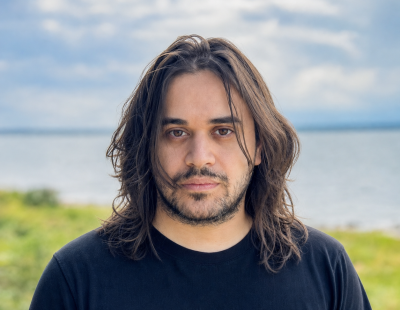
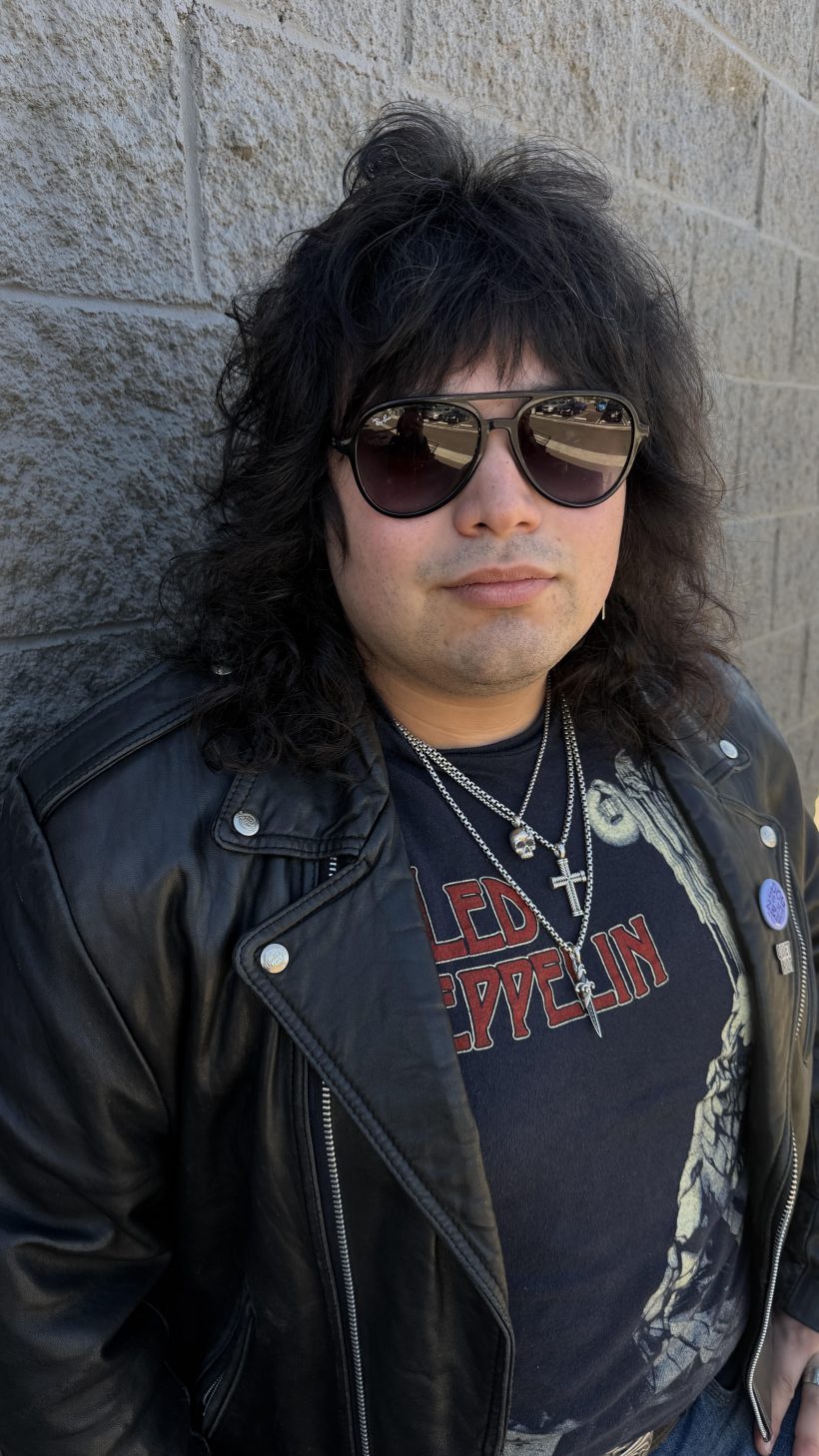
John Torra’s story could only have happened in the digital age. A few months ago, Torra was the vocalist of the New Jersey band Fire ‘N Ice. When hair metal lifer Jizzy Pearl announced he was leaving Quiet Riot, Torra was one of roughly 700 people who auditioned. He also shared his audition on social media. The videos went viral; fans were amazed at how much Torra sounded like the band’s original vocalist, Kevin DuBrow.
Torra flew out to Los Angeles to officially audition for Quiet Riot. The band asked what songs he wanted to sing. He said he knew the whole set and told them to pick. Within a few songs, they knew they had their guy.
Much of the news coverage, including in major media outlets, has focused on how Torra was hired. It’s clear, however, that Quiet Riot got the right person. The band is back in the conversation for the first time in decades and sounds its best since its heyday. They are also a truly multi-generational band: Torra was born when original bassist Rudy Sarzo was 52. The novelty of Torra’s ascent is part of the success, but he’s also proved he can front an iconic band in a matter of weeks. Torra told us his story.
When you stepped on stage for the first night with the band a few weeks ago, what did it feel like to be the frontman?
John Torra: I’ve been performing since I was 15 years old, so it was something that I was already used to. Stepping on stage with Quiet Riot is a whole other level. I was definitely a little nervous. Once I got out there, I was like, “You know what? Here I am. I worked hard to get to where I’m at. This is my moment.”
Did you guys agree on a first song? A lot of bands have one song that lets them get comfortable.
Torra: When I auditioned for the band in the studio, we ran the set list the way we would for a regular show. There wasn’t, “Do you want to try this song first to really see where you’re at?” It was just, “Let’s go right into it.” We did the set from top to bottom four times.
Most people go viral one time. You get the job via an online audition; you go viral. That makes sense. The morning after the first gig, half of my feed is Quiet Riot videos and people talking about your performance.
Torra: I knew that first gig would be my first impression to the public. This is something I’ve been chasing after for a decade. When I was 13, I picked up a guitar, and then at 15, I started singing and performing live in venues and clubs on Long Island. I knew that this was what I was meant to do. I wasn’t going to go to school and be a doctor or a lawyer or anything like that. You know, nothing wrong with that, but it just wasn’t me. I knew music was my passion. When I got the call to come out and audition in person, I knew it was the moment I’d spent the last 10 years working toward.
How did you learn your craft? Are you the classic “listen to records and copy it” type? Did you ever take vocal lessons?
Torra: I never had vocal lessons. I learned to sing through trial and error. I would sing, then listen back to myself. As a guitar player, you know the notes and pitches, so you kind of blend the two. I would sing something, record it, listen back, and make adjustments until it matched what I was singing. Then I learned control, vibrato, and how to maintain pitch. It was just all trial and error.
Everyone is hearing the finished product now. Was there a lot of stop-and-start learning to sing?
Torra: It came naturally. There’s always going to be hiccup moments, or moments when you’re not having a good day, or you’re singing something, and it’s not in your wheelhouse. There’ll be times when maybe I’ll want to learn how to sing a certain song, and it might take me a little bit to get there. It’s like how bodybuilders train and build muscle. It’s about building strength, technique, and the ability to practice and perform it perfectly.
Have you ever blown your voice out? How do you protect it so that you can do show after show?
Torra: One time. And it was only because I drank whiskey. There have been times when I’ve had a hoarse voice, but that’s usually after long periods of singing. The best way to keep your voice intact and stay healthy is to get plenty of rest and drink plenty of room-temperature water and tea. That’s what works for me. Everyone is different. Some people can go out and have pizza and soda and sing a full set, no problem, perfectly. And then they can have some nights where they do everything by the book and have a terrible night. It really depends. For me, the key thing is rest, drinking lots of water, staying hydrated, and pacing.
The genre you’re in was built on people smoking, partying, and still going out and performing every night.
Torra: (laughs). When it comes to singing, this is your instrument. It’s not like a guitar where, if you break a string or it goes out of tune, you can tune it back up or replace the string. Once this goes, it goes. This is my job, so I maintain it and stay on top of it.
The world’s changed a lot too. The 80s bands didn’t have to worry about digital recording. You live in a world where everyone who comes to your gig has a high-quality camera. In 1983, you could screw a gig up and move on.
Torra: The only people who would know were people who attended the show, and it would spread by word of mouth throughout the town. But nowadays, everything’s documented, everything’s on camera, so you just got to be ready. Any little mess-up is documented.
How did you fall in love with this music? What spoke to you about it?
Torra: My Dad and uncle grew up in that era. My Dad played in bands in the ’80s, and he grew up around the New York City club scene. My introduction to rock was Led Zeppelin and Elvis Presley. Then I discovered bands like KISS. It wasn’t until I found Van Halen that it really took off.
I was fascinated by the era and everything about it: the sound, the style, the look. That was the era of MTV, so you had all the music videos, and they were fascinating. To see a generation of kids going full-out, to the extent of making it their whole lifestyle and personality, I thought it was an incredible thing. You don’t see that too often nowadays.
A lot of people now roll on stage in a pair of Crocs. Are you showing up to do the job, or are you showing up to mow your lawn?
Torra: (laughs). Exactly. I’ve noticed that too. The one thing I loved about the ’80s outfits was that even if people weren’t on stage, the fashion really was a statement: “This is who I am, and this is what I believe in.”
Were you a complete outlier in your high school? Did you have other friends that were into it, or was it just your thing?
Torra: I had some friends that were into it, but they didn’t go to the extent that I did, fully dressed up as the typical metalhead. My best friend was more disco and freestyle. We kind of just clicked because we loved the same era. I jokingly said, “If this were back then, we would hate each other.” A lot of kids thought it was cool because I did my own thing, but also weird and lame because it reminded them of their parents. I didn’t care what anyone thought or said. I was doing me and minding my own business.
What was it about Quiet Riot in particular that spoke to you out of all of the glam and hair metal?
Torra: Quiet Riot was the band that knocked down that wall for all those bands that signed later on in the ’80s. They were the pioneers. Before you had Ratt, Mötley Crüe, Dokken, and Cinderella, there was Quiet Riot. They played during the punk and new wave era, when heavy metal wasn’t a word and clubs and labels didn’t want anything to do with it. Once Quiet Riot came out, especially with Metal Health in ’83, that knocked that wall down. They revolutionized heavy metal. Metal Health is one of the most important albums in heavy metal history.
I saw an Internet comment that said something like, “I didn’t have Quiet Riot becoming my favorite band again on my bingo card in 2026.” When you see comments like that, how does it feel as the new frontman?
Torra: It’s bizarre that this has been blowing up in mainstream media, ’cause when was the last time any heavy metal band in this genre was talked about in mainstream news?
It’s usually only when someone gets arrested.
Torra: (laughs). Well, it makes me happy that fans are loving everything that’s going on, and I’m happy to make people in the metal community proud. This is a big thing, and it’s great to see the fans loving it and everyone going crazy. Kids younger than me are showing up in denim vests with their patches; they’ve got studded bracelets, and they’re rocking out. And it’s cool seeing that. Parents are bringing their kids now, ’cause it’s like, “Hey, Mom and Dad, I think your music’s cool.” It’s great to see that the younger generation is loving this stuff, and it’s becoming the new big thing.
What kind of reactions have you seen in the shows so far?
Torra: People have gone crazy. I brought back the (Metal Health album cover) mask. So I come out in the mask, and people go nuts when they see it. They’re already hyped up on the first song. Later in the set, when we get into the hits, like “Cum On Feel the Noize”, “Slick Black Cadillac”, the call and response is incredible, and they’re very, very loud.
We do a song called “Thunderbird” that Kevin DuBrow wrote for Randy Rhoads when he left to join Ozzy; we play that song every night as a tribute to Kevin, Randy, and Frankie, since they’re no longer with us, to honor their memories. People tear up. And then, of course, when you get to “Cum On Feel the Noize” and “Metal Health,” it’s crazy, and it doesn’t matter what age you are. They’re just chanting and pumping their fists.
Rudy (Sarzo, bass) and Alex (Grossi, guitar) have played thousands of shows. Johnny Kelly was in Type O Negative. Do you decompress with them or talk to them after shows about what works?
Torra: They take care of me. I always tell them to take notes each show ’cause I want to improve for the next one. The majority of the time, they don’t have any notes ’cause everything’s just flowing. But they’ll maybe once in a while be like, “hey, just watch your timing on this one,” or “your pitch was a little off,” or something. Little critiques, but I always encourage them, like, “I want to be the best,” and they’ve had so many years of experience in this industry. I’m very open to knowledge. I always encourage them to pass that all along to me so I can grow.
As someone who grew up as a frontman in the digital age, there are two sides to the coin, right? For all the positivity, there will still be negative comments.
Torra: One of my good buddies told me this once, and it’s true: “If they’re not hating on you, you’re doing something wrong.” I’ve seen comments, and it doesn’t bother me. There’s always going to be someone out there who’s not happy or has something to say, and that’s just reality. All I’ve got to say to that is, “Sorry you feel that way.” I don’t let it get to me. It doesn’t bother me. I keep doing my thing, and that’s that. I’ve seen some really bad ones, and I’m just like, “Dude, I’m a kid! You’re 50 or 60, you don’t even know me.” (laughs).
You’re riding the wave now, but eventually things will level off a bit. Are you thinking new music? What is the plan to keep this going long term?
Torra: We’re focused. We have a bunch of shows lined up for 2027, so that’s the big start. As far as what the future holds, anything’s possible. We’re definitely looking to do some big things.
Are there one or two songs from the band that you love to perform most?
Torra: “Condition Critical” is the title track off their follow-up to Metal Health. When I was getting ready to audition with the band, I had a week to learn 15 songs front to back by memory. It wasn’t in the terms, but I made sure of it. So I learned the whole setlist and all the cues. “Condition Critical” was one of the songs. I knew the song, but I didn’t know it well. I remember listening to it and thinking, “Wow, Kevin’s going up there; he’s screaming the majority of the time.”
I started learning it and was like, “Oh my God.” I actually feared that song. I listened to it constantly until I knew it like the back of my hand. I started to love it. When we would play it, it sounded incredible. We fine-tuned it, and the band adjusted to my performance. Now I see their faces light up because it showcases the intense DuBrow-style singing.
What has it been like to see your old bandmates and people in local clubs?
Torra: It’s been incredible for them. They’re so happy for me. They said, “Listen, you deserve it for the amount of work, blood, sweat, and tears you put into this, and we knew how determined you were to make it. We’re very happy for you.” They’re happy that it’s someone they know and someone from their town.
One thing people love about your performances is how much you can channel Kevin. How do you make sure that some of John still stays in that performance?
Torra: At the end of the day, I’m John Torra, not Kevin DuBrow. I am going to perform and sing them the way Kevin would have, but with my own take. I make it my own, but I also do some things like Kevin and keep it in the same style, ’cause I know a lot of the fans want to hear these songs the way they’re supposed to be sung and performed.