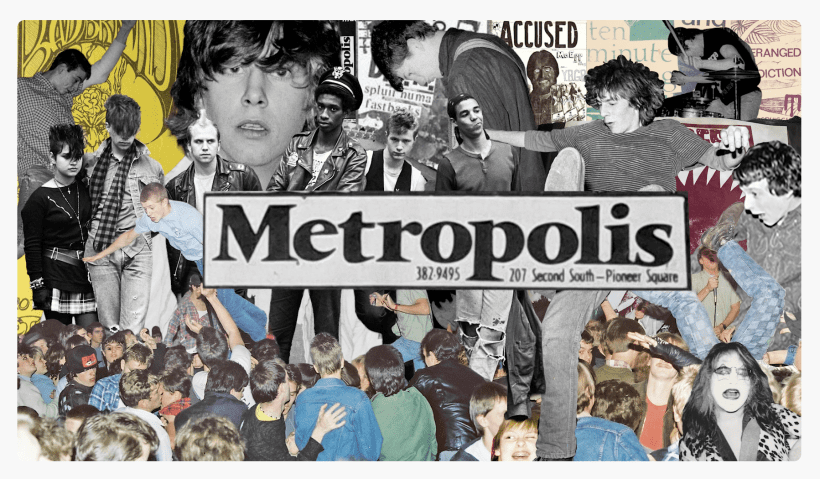

It’s been a rarely explored topic in the telling of Seattle’s grunge history, but those who were there at the time, swear that the punk/hardcore scene in that city in the early 80s was the petri dish in which the influential genre was cultured and grown. Specifically, a short-lived all-ages club called the Metropolis, was by local accounts something of a Ground Zero for connecting many of the important future players—members of Soundgarden, Mudhoney, Green River, Melvins, Pearl Jam, Nirvana and many more—whether they were onstage or in the crowd. New York Times best-selling author, Jonathan Evison—vocalist for March of Crimes (under the pseudonym “Munkyseeker”) with Ben Shepherd (Soundgarden) and Stone Gossard (Pearl Jam) back in the day—was a regular there as a teenager, though he lived across Puget Sound on Bainbridge Island. Evison honed his early writing chops in his Simplex 1 fanzine, and is now working on producing a documentary about the Metropolis, which is currently under way.
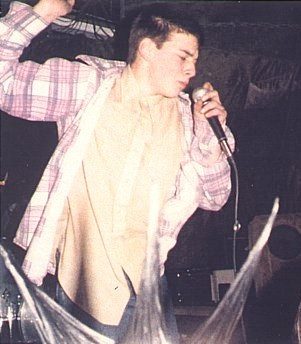
The first on-vinyl examples of grunge didn’t happen until a couple years after the Metropolis was shut down in early 1984, but the principals of that scene have always pointed to its short run as a key period in Seattle rock history. Now Evison, with this documentary, wants to bring the story to the rest of the world. We shot him some questions via email to get the details about what made the Metropolis special and why it matters so much to him and his peers from the era.
Give our readers a little background on the Metropolis and set the scene a bit, as far as what kind of venue it was and what kind of music it hosted.
The Metropolis was an all ages club opened by Frenchman Hugo Piotin in April of 1983, along with Gordon Doucette (Red Masque), with a big assist from Susan Silver, who went onto manage Soundgarden, Alice in Chains, and others. It was originally intended as a sort of art gallery/industrial space in the spirit of Andy Warhol, but Gordon and Susan started booking punk shows. There was other music, too, from reggae to industrial to more power-poppy new wavish stuff, but the punk rock really took hold. Sub Pop founder, Bruve Pavitt would DJ some nights, and he’d play an eclectic mix of stuff.
How was it different, for instance, from some of the other punk venues/art galleries that put on shows during this same period?
In the past, Seattle punk clubs were often rented VFW halls, or over 21 bars, or larger venues like the Showbox. The Metropolis was the first club that felt like it belonged to us, the teens who frequented it. Hugo basically gave us the keys to the asylum. Everybody kinda had a vested interest, or a job. Like, when I wasn’t on stage playing, I was stage-side doing band support, righting fallen mic stands or monitors, helping injured stage divers off the stage, that kind of thing. We policed the place ourselves, because we wanted to preserve it. There was rarely any of the violence that often attended punk shows in other cities (looking at you, San Diego and San Francisco!). The cover was never more than four bucks, and if you only had a buck-eighty, Tony the doorman would usually let you in, anyway, and pay the difference himself out of pocket.
Was the fact that the Metropolis was an all-ages club important at this time in Seattle?
Absolutely! At fourteen, I was among the younger kids. Mark Arm (Green River, Mudhney), and Jeff Ament (Green River, Pearl Jam), and Steve Turner (Green River, Mudhney), and Alex Shumway (Green River) and a lot of the kids were in their later teens, and there were some people in their twenties. But the place was formative for a lot of us—our first taste of being creative and having a voice, and given a license to be whoever we wanted to be. It was a safe space for a lot of us.
Above: Spluii Numa, featuring soon-to-be Green River and Mudhoney members Steve Turner, Mark Arm and Alex Shumway.
You were in a band called March of Crimes that played there. Tell me about your band and some of the shows you played at the Metropolis.
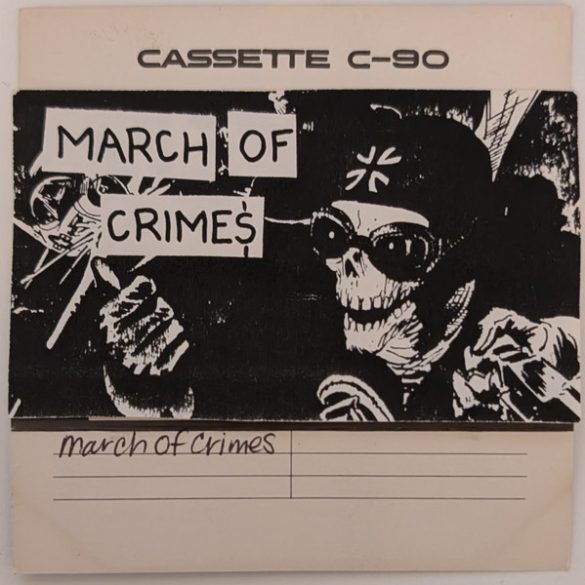
March of Crimes were a hardcore outfit. We were kind of a footnote in Seattle music history, since Ben Shepherd (Soundgarden), and for awhile Stone Gossard (Green River, Pearl Jam) were in the band. We never made a record, just a demo tape, which was pretty much all anybody made back then. Seattle didn’t have the infrastructure of say, LA, or San Francisco, so there weren’t a ton of records being made yet.
What were some of the other notable local bands that played there during the club’s short run?
For local bands you had the U-Men, the Fastbacks, the Accüsed, Rejectors, DSML, Spluii Numa, Mr. Epp (with Mark Arm and Steve Turner), the Fartz, the Silly Killers, Malfunkshun (with Andrew Wood of Mother Love Bone), Ten Minute Warning (with Duff McKagan), Bundle of Hiss (with Dan Peters of Mudhoney), Bam Bam (with Matt Cameron of Skin Yard and Soundgarden), Red Masque, Deranged Diction, so many! And we all jumped on stage with each other, and grabbed the mic and sung along—it was often a free-for-all.
As for touring bands, you name it! Replacements, Violent Femmes, Bad Brains, DOA, Butthole Surfers, Tales of Terror, Suicidal Tendencies, Hüsker Dü, pretty much everybody—and always with at least two local bands opening, and never (well, once) over four bucks at the door.
Was the Metropolis somewhat of an incubator for the grunge scene that started to coalesce a bit later?
Absolutely. Without the Metropolis, there’s no Mudhoney, no Pearl Jam, no Soundgarden, no Sub Pop records. And not just bands, but celebrated visual artists like Harold Hollingsworth, and photgraphers like Charles Peterson, and writers like me.
Touring bands played there, as well. What were some shows that you feel were impactful on the local musicians and audiences?
I think a bunch of us agree that Tales of Terror from Sacramento made an indelible impression on us. The squealing twin guitars, that Stooges-esque loose tightness, the swagger—they embodied everything the “Seattle Sound” was groping toward. Green River would later cover the ToT song “Ozzie.” I think the Replacements made a big impression (though they trashed the green room like assholes). I remember Really Red blowing our mental barn doors off, and the Femmes. But, honestly, the place really belonged to the local bands, we all felt a sense of ownership, thanks to Hugo and Gordon.
Above: Deranged Diction, featuring Jeff Ament (Green River, Mother Love Bone, Pearl Jam) and Bruce Fairweather (Green River, Mother Love Bone).
Any personal favorite memories of shows or performances?
Well, the aforementioned Tales of Terror, whom March Crimes opened for. I remember when Bad Brains played (we were not happy about the eight buck cover), and they came out and played twenty minutes of heartbeat reggae until the punks started getting restless and heckling them. They finally acquiesced to the restless natives and launched into “Pay to Cum,” or “The Big Takeover” or something, and the place went crazy! Butthole Surfers, with brother-and-sister dual drummers, made a big impression.
You’ve had quite a successful career as a novelist, so what made you want to do a documentary about the Metropolis?
The Metropolis made me who I am. It was my safe space, my family, the incubator of my creative impetus. Writing show reviews for my fanzine were some of my earliest writing efforts. So many of us had this experience at the Metropolis. It was truly a watershed moment, though it only lasted eleven glorious months. I mean, in directing this film I feel like I have a big responsibility to tell it right for all the people who were fortunate enough to be there. It was life-changing for all of us.
Above: Malfunkshun, featuring Andrew Wood (Mother Love Bone).
What do you think this documentary will show the music world, as far as the importance of this venue, at this time?
A lot of punk docs seem to be about disaffected youth, or teenage angst, or unfocused aggression. The Metropolis was an antidote to all that. It wasn’t about tearing down, it was about building up, and creating, and collaborating, and throwing creative shit at the wall, and having each other’s backs, and supporting, and yes, loving one another. Man, the relationships forged there have literally lasted a lifetime. My production partners, Alex Shumway (ex-Green River) and Marcus Bastida, I met those guys at the Metroplis forty-odd years ago, and we are still pals. We’ve grown into crusty old punks together, and it’s magic. When we talk about the Metropolis, we can finish each other’s thoughts. Really, it’s an honor to make this film, everything about it just feels right, every aspect of the making of it just comes together so seamlessly. The whole venture feels, well, like the Metropolis felt. Like a creative collective.
How can people who want to support the making of the documentary get involved?
We are still running a crowdfunding campaign to help defray production costs. Go to the page, and you can watch a sizzle reel (embedded below), and see photos, and read some more history. Most importantly you can throw down five bucks, or a thousand, and press “Follow” to get updates on the film.