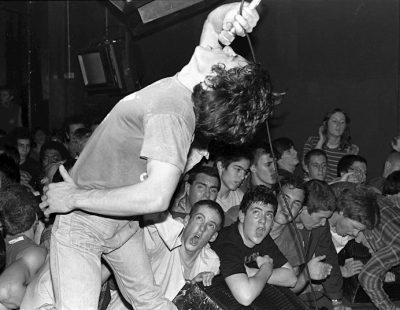
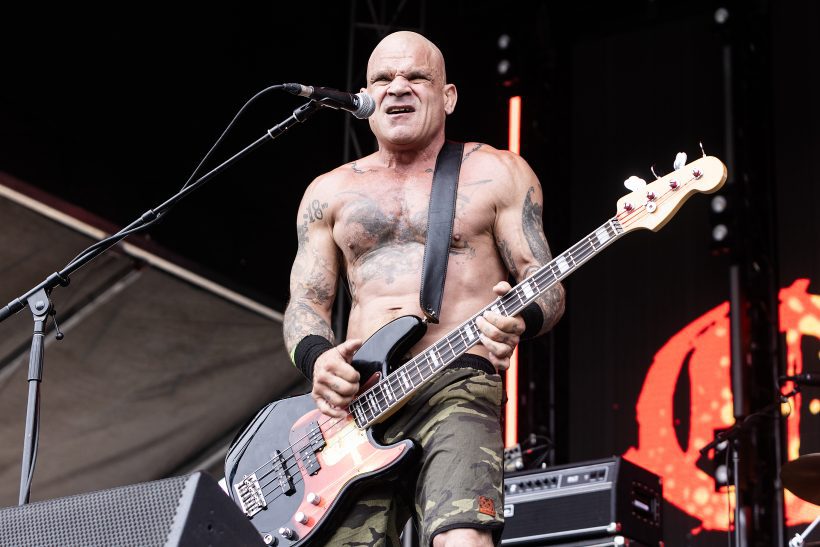

A Harley Flanagan renaissance is afoot. It started when the Cro-Mags founder released his warts-and-all biography, Hard-Core: Life Of My Own, a decade ago. Since then, Flanagan has entered one of the most productive periods of his turbulent career, a time marked by introspection and a desire to process and integrate his difficult experiences from adolescence and early adulthood.
First, Flanagan won sole rights to the name “Cro-Mags” after a four-year legal battle. Second, he began touring widely with a young, vibrant Cro-Mags lineup. He again opened the door into his life with the critically acclaimed documentary Wired for Chaos, available for home viewing. He also rerecorded The Age of Quarrel to honor its 40th anniversary, exorcise the demons of band infighting, and reclaim songs he wrote as a young man. Finally, Flanagan is spreading good cheer and fitness motivation on social media. There aren’t many things more inspiring than seeing a ripped 59-year-old doing body weight exercises while on tour. Flanagan also continues training in jiu-jitsu during his time off the road.
Flanagan and the Cro-Mags will headline a special Age of Quarrel set at Decibel‘s Metal & Beer Fest in Philadelphia on May 2-3, a city with a long history for him. The Age of Quarrel is on any short list of the best hardcore albums ever released, and in all honesty, is fighting for the top slot with Bad Brains. Flanagan talked to us about why The Age of Quarrel still matters and his mixed feelings on an album that is a big part of his musical legacy. Despite all the misinformation, Flanagan is incredibly open and transparent and painstakingly honest. He even follows up with thoughtful e-mails elaborating on this discussion.
How did you get lined up to play the festival?
Harley Flanagan: Oh, Christ, that’s probably the worst question to ask me because I don’t really remember (laughs). Shows come to me. Usually, they come through my agent, and I think I might have been asked about this via e-mail. That’s an unfair question. I’ve been gigging for over 40 years. How did the show come to me? I don’t fucking know. A bird flew by my window and said, “Hey, you want to play at Decibel?” And I said, “Yeah, fly back to Philly and tell them sure.”
Have you done full sets of the entire album before, and will you be doing anything else?
Flanagan: Yes, but not in a while. Just to be fair, I don’t know if we’re going to be doing the entire album at that show. We’re going to be doing most of it, at least three-quarters or more. But I have a lot of material, and I like playing those songs, too. It is the 40th anniversary, and because of that, I will be playing a lot of those songs. But I got other material that I enjoy playing, so I’m not gonna make it exclusively anything.
I’m just putting this out there: if anybody wants to join us on stage that night and grab the mic, feel free. With the rerecording, I’m giving the record back to the fans. There’s just been so much negativity, bad karma, and bad energy about that record for so long. I enjoy playing the songs, and I feel it’s no longer mine. It doesn’t belong to the individuals in the band or who were in the band. It belongs to the people who appreciate it.
Many albums, including Age of Quarrel, have become part of the collective consciousness at this point. They mean so many things to so many people that, in a lot of ways, they leave a creator’s hands.
Flanagan: That’s something that I’m still grappling with, as I’m sure a lot of people are in their own way. When you create something out of pain, and it becomes part of other people’s joy, it’s a little complicated. There’s nothing but trauma on that album.
I was trying to explain this to someone the other day. For some people, it’s kind of like a game, or a form of nostalgia. It’s like a collectible baseball card, or something from their youth or their past that is meaningful and makes them happy. And you have all these people at different labels who want to add it to their catalog and make it part of their collection. And for me, it’s like—I don’t want to say it’s belittling, but it sort of makes light of the amount of suffering that is in those lyrics and in that record.
I’m glad it makes other people happy. I’m glad it has given other people strength in their lives when they needed it. But for me, it’s a place of desperation. I think of those days, and I think of not knowing where I was going to eat. I think of the fear of walking down the streets and being worried about making it to where I was going. I think about hearing this woman getting raped in the distance and not knowing where she was, and knowing I couldn’t do anything. I think of violence, I think of extreme poverty and being homeless. None of these things bring me happiness. I still suffer from bad PTSD over them.
It’s complicated that this record makes other people happy. It was just a release for me at the time. I’m a musician and a creative person, and this was the only way I could release what I was going through. I unleashed what I was experiencing into music, and the reason the music was so aggressive and so hard is that I was living an aggressive, hard, violent, fucked-up life.
Now that I’m an adult, a middle-aged man with grown kids, I look back at a lot of things that I did, and I’m like, “It’s horrifying to me.” I have to look back on a lot of things that happened, and it still hurts. It’s complicated, bro. I think everybody who played on that record is pretty fucked up. Every one of us went through a lot of different things in our lives that pushed us to a place where there was no return. I think that’s why that lineup could never get back together, because we’re all so damaged.
I don’t know if I could ever say the album made me happy, but if I have to work through some shit, I can put that album on, and it helps me do that. That’s a real gift that you’ve given people.
Flanagan: I’m grateful that I was able to do something with it. You’d have to be a piece of shit not to be grateful for the opportunity to uplift others or pick them up when they need it. Actually, that’s one of the things that’s so discouraging for me about that record. I tried so hard, for so many years and in so many different ways, to get all those guys to the table and have a conversation about what we could do to get on stage together or to try to get the rights to these records back. Every attempt was shot down by all of them. It just goes to show that there was a lot of trauma involved in all of that.
“To Offer That Courage-It’s An Honor”
With these feelings that you have about the album and the experiences that led to it, has there ever been any point where you’re just like, “I don’t want to play this stuff,” or you wanted to walk away from it?
Flanagan: There’s a little bit of compartmentalization going on there. There are times when some of those lyrics hit home so hard that I tear up. I don’t think anyone in the crowd understands it; maybe a few people do. But again, these songs have inspired a lot of people and given them courage when they needed it, and I always try to remember that.
In a way, the album was about me trying to find my own courage in a world that was stacked against me. So I can see how it can be a rallying cry for someone who needs to find courage on the battlefield of life. That’s what I meant when I said it brings people joy. Life is a fucking struggle. It is a battle, and if something gives you the courage and that fucking kick in the ass to make you say, “You know what, fuck it, let’s do this. Let’s fucking go. Let’s go for it, man.” To offer that courage, it’s an honor.
I’ve loved how you’ve been sharing lighter glimpses of your life via social media lately, including fitness tips and inspiration from the road.
Flanagan: It’s all lies! (laughs). No, I’ve always been that way. I’m just doing it more positively now. When I was living on Avenue A and eating trash and just being a fuck-up, I was going up on the roof and working out, watching the sun come up or go down. I’m a very physical person. I like to fight, I like to play music. It’s funny because my wife is a philosopher. She’s so deep and trying to get beyond all this. And I’m like, I already went that route. I’m really cool with being here right now.
I’m definitely on a roller coaster. I go all over the place, from extreme joy to extreme depression, but I know that things come and go. I don’t let the downs crush me. I ride them out, I maintain, I try to get some exercise, and I know that this will pass. It may be a chemical thing, but I remind myself and other people all the time: You can’t be happy all the time. You can’t feel good all the time. That’s just not realistic. That’s why people start doing drugs, because they want to be happy all the time. They want to feel good all the time. You’re going to have ups and downs.
What kind of things have people said to you about The Age of Quarrel over the years? Do any of the stories stick in your mind?
Flanagan: A lot of those lyrics are just violent, straight street-thug shit. Songs about fighting, robbing people and stealing shit, like stealing food. It’s tragic, dude. It’s a record about being a homeless teenager. It wasn’t just for fun. For some people, that shit became a goddamn textbook on how to act. You wound up with a lot of violence and a lot of skinhead shit going down with The Age of Quarrel as the soundtrack. For whatever reason, a lot of people thought I was encouraging that type of shit. All it was was me processing it. I wasn’t encouraging it. It was my journal, but people don’t know that because rock and roll is so fake, and music is so fake. It’s all just theater.

The kids who identified with it were going through the same problems as me, which was a lot of the kids in the hardcore community. Most of us came from some fucked-up life, whether it was a broken home, an abusive home, or a home with no happiness. Not all of us were poor on the streets; I know plenty of kids who turned out to be rich as fuck, but they found themselves there for a reason. Something was missing in their lives. We all found ourselves in those same little places, and they identified with my words, and sadly, a lot of people took that shit to heart.
I had a conversation with (former Navy SEAL and author) Jocko Willink. He said, “People found what they needed in it.” If people found violence and aggression and hate, that’s what they were already looking for. If people found hope and courage, that’s what they were looking for.
I was the first skinhead in New York, and that violence was not a part of the New York scene. I was a product of that neighborhood, but most of those kids were not. I grew up in a neighborhood that was mostly Hispanic and Puerto Rican, with gangs and a lot of drugs. Lines of drug addicts wrapped around the block. This is the stuff you see when you look at the old New York footage—burnt-out buildings, drug dealers, gangs, hookers. This is what I grew up in. I don’t even go down there anymore, man. I avoid that place like the plague because it doesn’t make me feel good. Those memories are not good for me.
What’s Next
Do you have many memories in Philly?
Flanagan: I have a lot of memories in Philly. One of the first shows that I played with the Stimulators was at a place called the Love Club in Philly, I think. I have a long history with Philly.
As someone who came up when the subculture was an outsider thing, is it strange to see how hardcore and metal have turned into a business? Financially, the music is doing pretty well. The subculture has changed and evolved in your lifetime.
Flanagan: I think that’s what happens with any genre of music if it sticks around long enough and becomes somewhat viable. We’ve got people who were into that when they were kids who grew up and got jobs as A&R people. They wind up signing bands that come up, the next generation of something they identify with. I think it’s exciting. I’m not going to be one of these miserable fucking gatekeepers. Now we can reach the world with our music. Maybe that takes it out of the basement and out of the 30-to-40-person shows. But you know what? Those shows are still going on. And now, you can potentially make a living playing this shit.
I understand there will be a Cro-Mags beer (from Bear Cult Brewing) at the festival. Were you aware of this?
Flanagan: They asked me if they could make one, and I asked them if they did a non-alcoholic beer, which they didn’t. I don’t really drink. I will have a drink once in a while. I think last year I drank like eight or nine times. So I don’t really say I don’t drink. This year, I poured myself a drink once, took one or two sips, and didn’t finish it.
But you know what? If people can drink responsibly and have a good time with their friends, God bless. I smoke weed. I don’t tell people what to do. As long as you’re not committing robberies and crashing cars and doing horrible shit, have a good time. I ain’t judging. It’s not my business. Have a good, responsible time.
In addition to The Age of Quarrel rerecording, what is next for Cro-Mags?
Flanagan: I have a brand new album that is almost done. I’ve actually been completing two albums at the same time. So I am busy, and that’s part of the reason we will not be touring much this year. We have two tours coming up in Europe and a handful of shows booked in the States. For the most part, it’s going to be finishing records and just playing a few gigs here and there.
At the festival, we will be playing a good amount of The Age of Quarrel, and you all have an open invitation to take that mic. I have one request: Don’t hog it. Jump up, sing a verse, and then give it to someone else. Make it like a relay race. You get your minute, and then let someone else pop up. I don’t need anybody trying to run up and own the fucking gig. I want everybody to have a good time.
—-
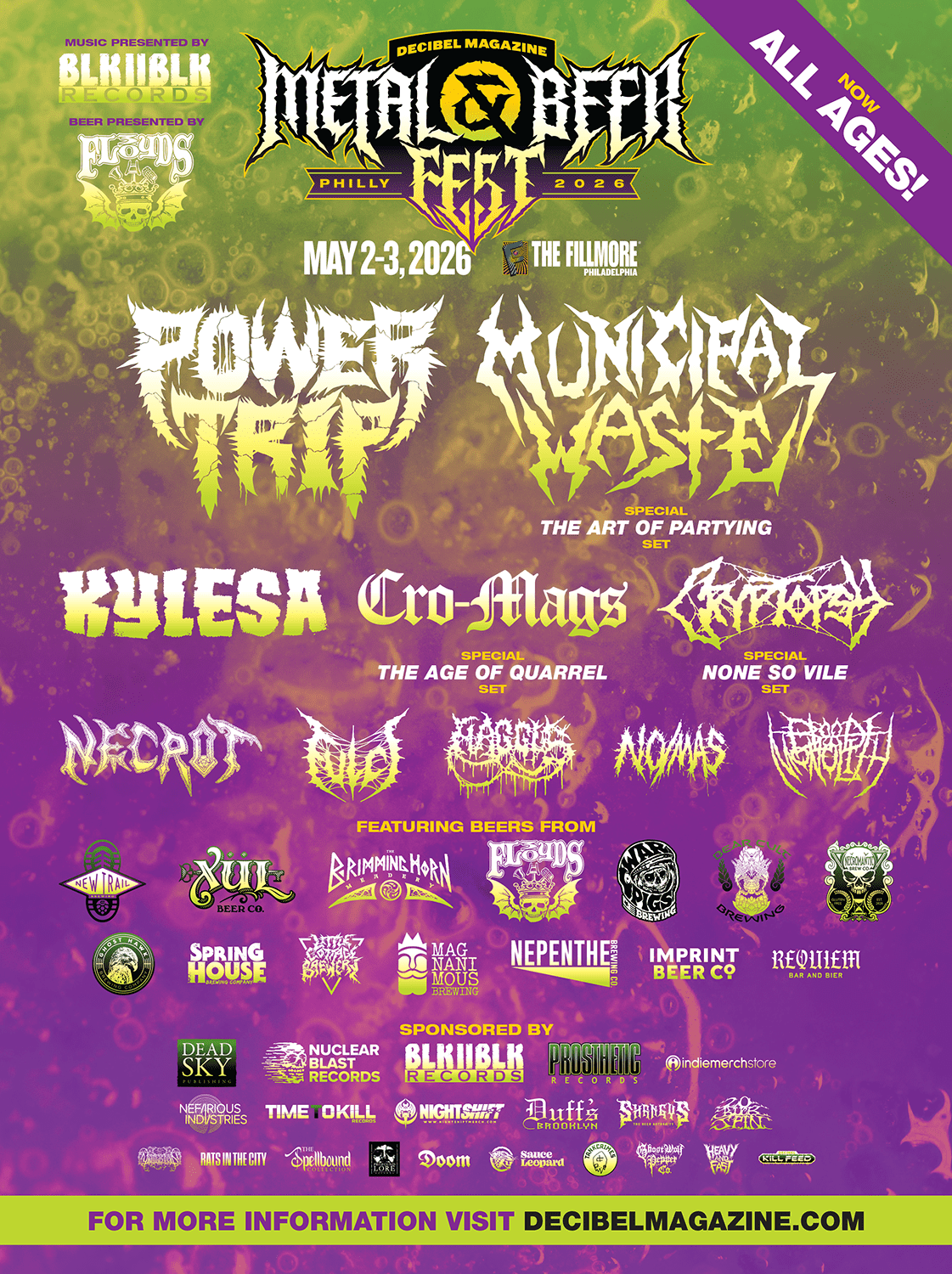
Catch Cro-Mags’ special 40th anniversary of The Age of Quarrel along with Power Trip, Municipal Waste, Kylesa and tons more at Decibel Magazine Metal & Beer Fest: Philly on May 2-3, 2006 at the Fillmore Philly. Daily lineups and all ticket option details for Metal & Beer Fest Philly 2026 can be found below:
MAY 2 TICKETS
MAY 3 TICKETS
TWO-DAY TICKETS
MAY 2
Municipal Waste (special The Art of Partying Set set)
Cro-Mags (special The Age of Quarrel set)
Kylesa
Haggus
No/Más
MAY 3
Power Trip
Cryptopsy (special None So Vile set)
Necrot
Fulci
Blood Monolith
“Just Metal” Ticket
Admittance to the day’s event, but as the name suggests, you just get to see the show—no beer samples.
“Metal & Beer” Ticket (21+)
Admittance to the day’s event plus unlimited* sampling from our diverse lineup of breweries presented by 3 Floyds. Decibel Magazine Metal & Beer Fest: Philly 2026 sampling cups provided. Limited to 500 tickets per day.
*Please note: In extremely extreme cases, certain high-ABV pours will be ticketed, with attendees receiving a limited number of tickets available to redeem for each offering.
Hails and ales to our sponsors!
3 Floyds Brewing
WarPigs Brewing
BLKIIBLK Records
XUL Beer Company
Nuclear Blast
IndieMerchStore
Prosthetic Records
Dead Sky Publishing
Duff’s Brooklyn
Brimming Horn Meadery
Bear Cult Brewing Co.
New Trail Brewing Co.
Nefarious Industries
Night Shift Merch
Doom Bar
Time to Kill
Nepenthe Brewing Co
Magnanimous Brewing
20 Buck Spin
Tankcrimes
Little Cottage Brewery
Profound Lore
Tankcrimes
Heavy and Fast Records/Distro
Sauce Leopard
GhostWolf Pepper Co.